



Damara Sheep vs Dorper, Australian White and Meat Goats — An Honest Comparison
Most people who end up with Damara sheep didn’t start out looking for them.
They were researching Dorper sheep, or comparing Australian White sheep, or seriously weighing up meat goats — and somewhere along the way they came across the Damara breed and started asking questions.
This page is for those people. We’re registered Damara breeders in NSW, and we get asked these comparison questions every week. So here’s our honest take — breed by breed — on how Damara sheep stack up against the alternatives.
We’ll tell you where Damara sheep genuinely win, where the other breeds have their strengths, and how to work out which one is right for your property.
Damara Sheep vs Dorper Sheep — Which Is the Better Low-Maintenance Breed?
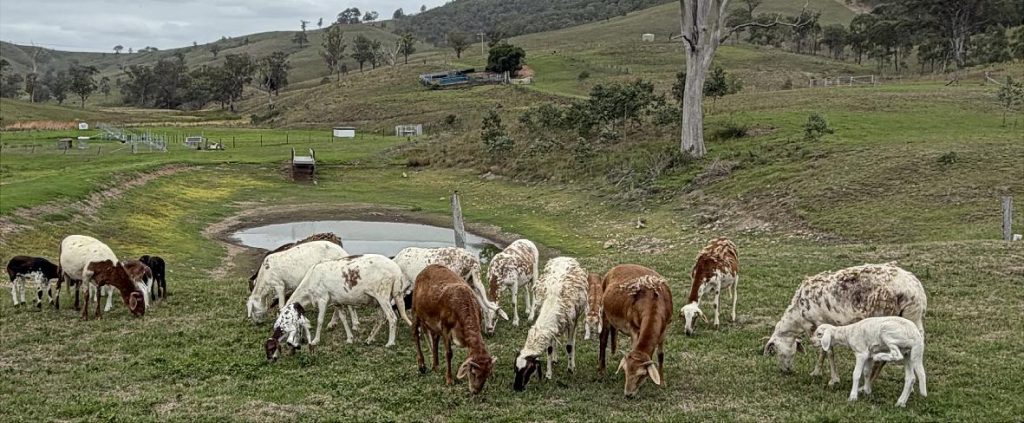
The Dorper is Australia’s most popular hair sheep breed, and for good reason — they’re a proven commercial performer with wide availability and strong industry support. If you’re comparing Dorper to Damara sheep, you’re already thinking in the right direction. Both are hair sheep. Both are low-input. But there are meaningful differences that matter depending on what you’re trying to achieve.
Where Damara Sheep Have the Edge Over Dorpers
True self-shedding — no exceptions.
Dorper are described as hair sheep, but many Dorper animals — particularly those with significant white Dorper genetics — retain a woolly fleece that requires at least annual shearing or dagging. This varies significantly between bloodlines. Damara sheep, by contrast, are a pure hair breed with no wool genetics whatsoever. Every animal sheds completely and naturally, every season, without exception. If zero shearing is your goal, Damara delivers it more reliably.
Superior performance in harsh, low-rainfall conditions.
Dorper perform well in good seasons and reasonable pasture. Damara sheep were genetically shaped over thousands of years in some of the harshest arid environments on earth — and it shows. In extended dry periods, on poor pasture, or in regions with inconsistent rainfall, Damara sheep maintain condition and continue to cycle where Dorper typically struggle and lose weight rapidly. For Australian properties that experience drought cycles, this resilience has real dollar value.
Fat tail energy storage.
The Damara’s distinctive fat tail is not just a physical characteristic — it’s a biological energy reserve that allows the animal to draw on stored fat during feed-scarce periods. Dorper don’t have this adaptation. In variable Australian seasons, this gives Damara sheep a genuine physiological advantage.
Parasite resilience.
Damara sheep show strong natural resistance to internal parasites compared to most commercial breeds including Dorper. In high-rainfall regions where worm burdens are a constant management pressure, this reduces drenching frequency and associated costs.
Where Dorper Have the Edge
Dorper have a significant head start in Australia in terms of available genetics, registered studs, sale volume, and industry infrastructure. If you need to purchase a large mob quickly, Dorper are easier to source. They also have stronger carcass data and more established commercial abattoir relationships in some markets.
Dorper also tend to be heavier-framed at earlier ages, which suits producers prioritising rapid turnoff weights in well-managed systems.
The Bottom Line — Damara vs Dorper
If your priority is maximum resilience, genuine zero-shearing, and low-input management in tough or variable conditions — Damara sheep will outperform Dorper. If your priority is maximum growth rate in a well-resourced system with easy stock access — Dorper may suit you better. Many farmers who’ve run both tell us Damara sheep are the more self-sufficient animal by a considerable margin.
Damara Sheep vs Australian White Sheep — Old Genetics vs New Composite
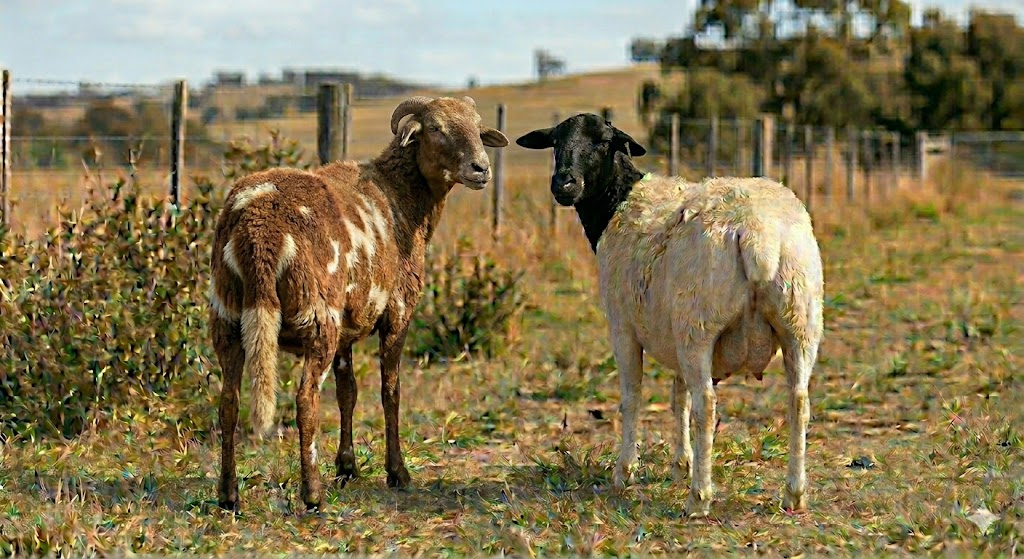
The Australian White is a relatively new composite breed developed in Australia, combining White Dorper, Poll Dorset, Van Rooy, and Merino genetics. It’s gained significant commercial traction in recent years and is heavily marketed as a premium self-shedding meat sheep. If you’re comparing Australian Whites to Damara sheep, here’s what the differences actually look like in practice.
Where Damara Sheep Have the Edge Over Australian Whites
Thousands of years of proven genetics vs a breed that’s decades old.
The Australian White was formally developed in the 2000s. The Damara breed has been naturally selected for thousands of years in some of the world’s most demanding environments. That’s not a marketing claim — it’s the difference between artificially selected composite genetics and deep evolutionary adaptation. When conditions get tough, that depth of genetic resilience matters.
Shedding reliability.
Australian Whites are marketed as self-shedding, but shedding completeness varies significantly between individual animals and bloodlines due to the composite Merino genetics in the breed’s background. Some animals shed well; others retain a fleece that requires intervention. Damara sheep shed completely and consistently — because there are no wool genetics in the breed to interfere with the shedding process.
Drought hardiness and fat tail adaptation.
Like Dorper, Australian Whites don’t carry the fat tail adaptation of the Damara. In extended dry periods, Damara sheep have a physiological advantage in maintaining condition that composite breeds simply don’t possess. For Australian producers in variable-rainfall regions, this is a meaningful difference.
Parasite resistance.
The Merino genetics in the Australian White breed background contribute to higher susceptibility to internal parasites compared to pure hair breeds. Damara sheep’s strong parasite resilience — a product of their arid-region genetics — gives them a genuine low-input advantage in higher-rainfall areas.
Where Australian Whites Have the Edge
Australian Whites have been heavily developed and marketed for the premium lamb market and have strong abattoir relationships, particularly in the eastern states. They tend to produce heavier, faster-growing carcasses under good conditions and have more available genetics and sale infrastructure in Australia than Damara sheep currently do.
They’re also a visually striking, all-white sheep which has proven commercially appealing for stud and marketing purposes.
The Bottom Line — Damara vs Australian White
Australian Whites are a strong commercial breed in good conditions. Damara sheep are a more resilient, more reliably self-shedding, and more drought-hardy animal with deeper genetic foundations. If your farming system is intensive and well-resourced, Australian Whites are a viable option. If you’re running an extensive, low-input system in variable country — Damara sheep will work harder for less input over the long term.

Damara Sheep vs Meat Goats — The Hidden Costs of Going the Goat Route
A lot of people considering Boer goats, Rangeland goats, or other meat goat breeds end up seriously considering Damara sheep once they dig into the real costs and management differences. Here’s why.
Fencing — the Number One Hidden Cost of Meat Goats
Goats are browsers and escape artists. Standard sheep fencing will not contain goats reliably — you need purpose-built high-tensile or mesh goat fencing, which is significantly more expensive to install and maintain than standard sheep fencing. On a typical Australian property, the additional fencing cost for a goat operation versus a sheep operation can run into tens of thousands of dollars before you’ve bought a single animal.
Damara sheep are not escape artists. Standard sheep fencing contains them without issue, and their calm temperament means they’re not constantly testing boundaries. The fencing saving alone is a compelling reason for many producers to choose Damara sheep over goats.
Internal Parasites — Goats Are Significantly More Vulnerable
Goats have significantly higher susceptibility to barber’s pole worm and other internal parasites than sheep, particularly in higher-rainfall or coastal regions. This means more frequent drenching, higher drench costs, and greater risk of drench resistance developing in your herd. Deaths from worm burden are common in poorly managed goat herds in susceptible regions.
Damara sheep, by contrast, show strong natural resistance to internal parasites — one of the breed’s most practically valuable traits in Australian conditions. Lower drench frequency means lower costs and less risk.
Handling and Infrastructure
Goats require more robust and purpose-built handling facilities than sheep. Standard sheep yards often need modification or reinforcement to manage goats safely and effectively. Damara sheep work through standard sheep yards without any issues.
Temperament and Stress
Goats are naturally more flighty and stress-prone than sheep in handling situations, which affects meat quality at slaughter and makes everyday management more labour-intensive. Damara sheep — particularly from a well-handled stud like Hamilton Ridge — are calm, manageable, and easy to work with for farmers of all experience levels.
Where Meat Goats Have the Edge
Goat meat (chevon and cabrito) commands strong prices in specific ethnic and specialty markets and the demand is growing. Goats are also highly effective at vegetation control — including woody weeds and scrub — in a way that sheep are not. If weed control or niche ethnic market access is a primary goal, goats have genuine merit.
Goats are also well suited to steep or rugged terrain where sheep may struggle to graze effectively.
The Bottom Line — Damara vs Meat Goats
For most Australian producers looking for a low-input, resilient, meat-producing animal that’s easy to manage and doesn’t require expensive infrastructure — Damara sheep are the more practical choice. The fencing saving alone often pays for a significant portion of your initial flock purchase. Add lower parasite management costs, calmer handling, and no shearing, and the total cost of ownership for a Damara flock is substantially lower than a comparable goat operation in most Australian regions.
So Which Breed Is Right for Your Property?
Every farm is different. Here’s a simple framework to help you decide:
Damara Sheep are likely your best option if:
- You want a genuinely self-shedding animal with zero wool management required
- Your property experiences dry seasons, drought cycles, or inconsistent rainfall
- You’re running an extensive, low-input grazing system
- Reducing labour and ongoing management costs is a priority
- You’re in a higher-rainfall area where worm management is an ongoing challenge
- You want a calm, easy-to-handle animal that works through standard sheep yards
- You’re building a long-term breeding program on proven, deep genetics
You might look elsewhere if:
- You need large volumes of stock quickly and can’t wait for availability — Damara sheep are still relatively rare in Australia
- Your primary market is high-volume prime lamb production in an intensive, well-resourced system
- Steep, rugged terrain is a primary consideration — goats may be more suitable
- You have established goat market access you want to leverage
Not Sure? Ask Us.
We’d rather you end up with the right breed for your property than sell you sheep that aren’t a good fit. Call Keith on 0433 166 457 or send us an enquiry and we’ll have an honest conversation about whether Damara sheep suit your situation — and if they do, we’ll help you work out the right animals to start with.
Quick Breed Comparison at a Glance
| Feature | Damara | Dorper | Australian White | Meat Goats |
|---|---|---|---|---|
| Self-shedding | Always - 100% hair breed | Varies by bloodline | Varies - Merino genetics present | N/A - no fleece |
| Shearing required | Never | Sometimes | Sometimes | Never |
| Drought hardiness | Exceptional — fat tail energy reserve | Good | Good | Good |
| Parasite resistance | High | Moderate | Low-Moderate | Low |
| Fencing requirements | Standard sheep fencing | Standard sheep fencing | Standard sheep fencing | Purpose-built goat fencing required |
| Temperament | Very calm | Calm | Calm | More flighty |
| Availability in Australia | Limited - growing | High | High | High |
| Fat tail energy reserve | Yes | No | No | No |
| Suitable for low-input systems | Excellent | Good | Moderate | Moderate |
| Management complexity | Low | Low-Moderate | Low-Moderate | Higher |
Ready to Learn More About Damara Sheep?
Hamilton Ridge Damara Stud is based in Glendon Brook, NSW, and delivers purebred Damara sheep to farms across Australia. We’re registered with the Damara Sheep Breeders Society of Australia (Flock No. 0074) and the Rare Breeds Trust of Australia.
Whether you’re ready to enquire about stock or just want to ask some questions before you decide — we’re happy to talk.