



About Damara Sheep — The Breed Built for
Modern Australian Farming
Most sheep breeds were engineered for a specific production output.
The Damara was shaped by survival. That distinction matters more than it sounds. The Damara sheep spent thousands of years in some of the harshest arid environments on earth — not in a research paddock or a high-input feedlot, but in the unmanaged landscapes of southern Africa where only the most adaptable animals survived. What emerged was a breed defined not by what it produces under ideal conditions, but by what it maintains when conditions are anything but ideal.
In Australian farming systems — where seasons are variable, rainfall is unpredictable, and the cost of labour and inputs is constantly rising — that distinction is exactly what serious producers are looking for.
This page covers what the Damara breed actually is, how it thinks and behaves as a farming system animal, and why its characteristics translate directly into real-world farming outcomes for modern Australian operations.
Where the Damara Breed Comes From — and Why It Matters
The Damara sheep originates from ancient landrace populations that developed over centuries across the arid landscapes of Gross Damaraland — present-day northwestern Namibia and southern Angola. These environments were characterised by extreme
seasonal variation, prolonged dry periods, unpredictable rainfall, and severely limited access to consistent high-quality forage.
In these conditions, survival was not determined by production in the modern agricultural sense. It was determined by efficiency, resilience, and the ability to maintain body condition under sustained feed pressure. Animals that could not adapt were filtered out over generations — not by human selection, but by the environment itself.
“The Damara was not bred for ideal conditions. It was forged in the absence of them.”
This natural selection process created a sheep that is fundamentally different from any composite or intensively developed breed — because it was not designed by humans chasing production metrics. It evolved to perform in systems where the environment is the
primary variable, not the management regime.
Damara sheep were introduced into Australia in the late 1990s via imported embryos and semen from South Africa into Western Australia. Since then, the breed has remained relatively rare — with an estimated Australian population of around 500 registered breeding ewes nationally. This rarity is changing as word spreads among producers looking for genuine low-input genetics in an increasingly high-cost farming environment.

The Damara as a System-Responsive Animal — What That Means
in Practice
One of the most important things to understand about Damara sheep — and one that is rarely discussed in breed marketing — is that they are highly system-responsive animals.
This means their behaviour, condition, and performance are directly and visibly influenced by changes in the environment and management system around them. Rather than masking imbalance gradually — the way many modern breeds do — Damara sheep tend to express system changes early, through subtle but readable shifts in grazing patterns, movement behaviour, mob cohesion, and body condition.
“Livestock rarely fail suddenly. They drift gradually away from optimal performance as the surrounding system changes.”
This is one of the most important concepts in livestock management — and one that the Damara breed makes visible. The delay between cause and visible effect is where most management decisions become reactive instead of proactive. A paddock still looks functional. The sheep still appear normal. But beneath the surface, a system shift has already begun.
Damara sheep interrupt this delay. When the system begins to drift — through pasture quality decline, water availability changes, feed transition, or stocking pressure — Damara sheep often provide earlier visual and behavioural indicators than other breeds. These
signals may include reduced grazing enthusiasm, changes in mob cohesion, altered movement patterns, or early body condition variation across the flock.
This is not a weakness. In a well-managed extensive grazing system, it is one of the breed’s most practically valuable characteristics — because it allows earlier intervention, more accurate decision-making, and more stable long-term performance.
In short: Damara sheep don’t just perform in a modern farming system. They help you read it.
Physical Characteristics of the Damara Sheep
The Damara’s physical characteristics are not cosmetic features — they are functional adaptations developed over thousands of years in survival-based environments. Every defining trait of this breed exists because it helped the animal stay alive and productive when conditions were at their worst.
The Fat Tail — Biological Energy Reserve
The Damara’s most distinctive physical feature is its fat tail — and it is far more than an aesthetic characteristic. The fat tail functions as a biological energy reserve, much like a camel’s hump. In periods of feed scarcity, the animal mobilises stored fat from the tail to sustain body condition, support reproduction, and maintain lactation even when pasture cannot.
When conditions are favourable, the tail becomes fuller and wider, reflecting the animal’s nutritional status. When conditions tighten, the tail reduces — giving the farmer a visible, real-time indicator of system performance without needing to run the animals through a crush.
No composite breed has this adaptation. It is one of the most practically useful characteristics in Australian drought-cycle farming.
The Hair Coat — Zero Wool Management
Damara sheep are a pure hair breed with no wool genetics whatsoever. They carry a short, functional hair coat that adapts to seasonal temperature changes — developing a light undercoat in cooler months and shedding completely as temperatures rise. This is a deep genetic trait, not a seasonal variation — it is consistent across all animals in the breed without exception.
This means no shearing. No crutching. No dagging. No tail docking. Ever. For a farming operation focused on reducing labour inputs and overhead costs, this characteristic alone changes the economics of running a sheep flock.
Structure — Built for Endurance, Not Show
Damara sheep are medium-to-large framed animals with long, lean legs, a deep body, and strong structural soundness. Their conformation reflects their origins — designed for endurance, mobility across large grazing areas, and long-distance travel to water.
The term “dry legs” is sometimes used to describe the breed — referring to the absence of excess fat deposition in the limbs. This is an indicator of metabolic efficiency, not a production deficit. In extensive grazing systems, this efficiency translates directly to lower
supplementary feeding requirements.
Coat Colour — Wide Natural Variation
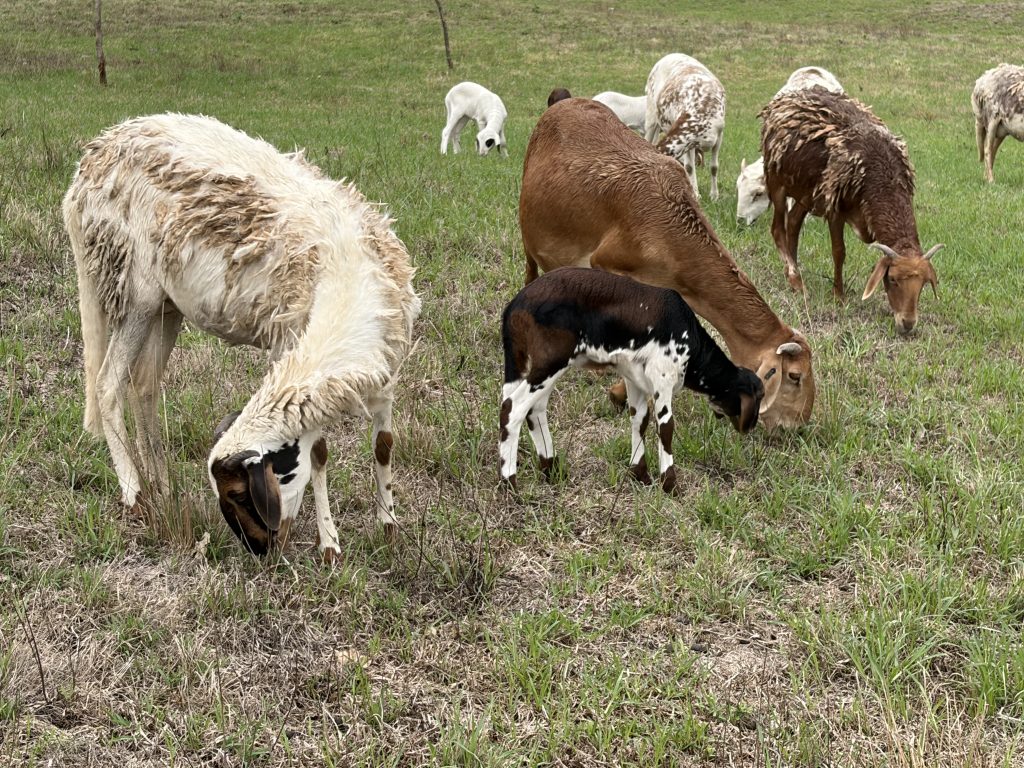
Damara sheep exhibit a wide range of natural colour variations — from solid brown and tan to black, white, and multi-patterned combinations. All colour expressions are considered correct within the breed standard. Colour is not a performance indicator and should not be used as a selection criterion in a production-focused breeding program.
Drought Performance — How the Damara Sheep Handles Tough
Seasons
Drought resilience in the Damara breed is not a marketing claim. It is the direct result of thousands of years of natural selection in environments where feed failure was the norm, not the exception.
In extended dry periods, Damara sheep demonstrate a combination of physiological and behavioural adaptations that most commercial breeds simply don’t possess:
- The fat tail mobilises stored energy to maintain body condition and support reproduction when pasture cannot
- Digestive efficiency allows the rumen to extract usable nutrition from low-quality, mature, or fibrous feed that other breeds cannot convert effectively
- Lactating ewes have been observed visiting water only every few days under certain conditions — a reflection of their arid-environment metabolism
- Body condition is maintained under feed pressure that would cause rapid weight loss in Dorper, Australian White, or Merino crossbred animals
- Fertility and cycling are maintained under moderate feed restriction — meaning reproduction does not shut down at the first sign of seasonal stress
In practical terms, this means that a Damara flock in a dry season is managing, not failing. Where other breeds require supplementary feeding to maintain basic condition, a well-managed Damara flock is drawing on its own biological reserves and continuing to
perform.
This is the difference between a breed that requires management during a drought and a breed that is designed for one.
Reproduction and Maternal Performance — Consistent Outcomes
in Variable Conditions
The Damara is a poly-oestrous breed — meaning ewes cycle and can be joined at any time of year, not only in spring. A well-managed Damara flock can produce three lamb crops in two years under the right system design. This reproductive flexibility is a significant
production efficiency advantage for operations looking to optimise their lambing calendar.
Damara ewes are strong, instinctive mothers with excellent milk production relative to their size and environmental conditions. Lamb survival is consistently high when ewes are managed well through the pre-lambing nutrition period. Ewes are capable of successfully raising twins without supplementation under moderate conditions.
Lambing in Damara sheep, when well managed, is characterised by calm, predictable delivery and strong bonding. Ewes that are well conditioned going into lambing require minimal intervention. Post-lambing recovery is efficient, and ewes redirect energy away from lactation quickly once lambs are weaned.
One often-overlooked reproductive characteristic: some Damara ewes have been recorded as fertile and productive at sixteen years of age — a longevity of productive lifespan that far exceeds most commercial breeds and adds genuine long-term value to stud animals.
Parasite Resilience — A Genuine Low-Input Advantage
Internal parasite management is one of the most significant ongoing costs in sheep farming — particularly in higher-rainfall regions where barber’s pole worm and other species persist in pasture year-round. Damara sheep show strong natural tolerance to internal parasites compared to most commercial breeds, a trait directly linked to their arid-region genetics.
In arid environments, parasite populations are naturally lower due to the climatic conditions. Over thousands of generations, Damara sheep developed immune responses and physiological tolerance to parasite challenge that composite breeds — particularly those with
Merino genetics — simply don’t have.
In practical farming terms this means:
- Lower drenching frequency — reducing chemical costs and the risk of drench resistance
- More resilient response to parasite challenge — animals recover faster with less condition loss
- Particularly valuable in higher-rainfall regions where Merino-cross animals require
intensive and frequent worm management
Important note: Parasite resilience does not mean parasite immunity. Damara sheep still require worm monitoring, appropriate drenching when indicated by egg count testing, and sound rotational grazing management. The difference is in frequency and severity — not elimination.
Temperament — The System Efficiency Factor Most Producers Don’t Value
Temperament is rarely listed as a key breed characteristic in technical livestock literature. It should be — because the stress level of your flock directly affects meat quality, reproductive performance, handling efficiency, and your own safety.
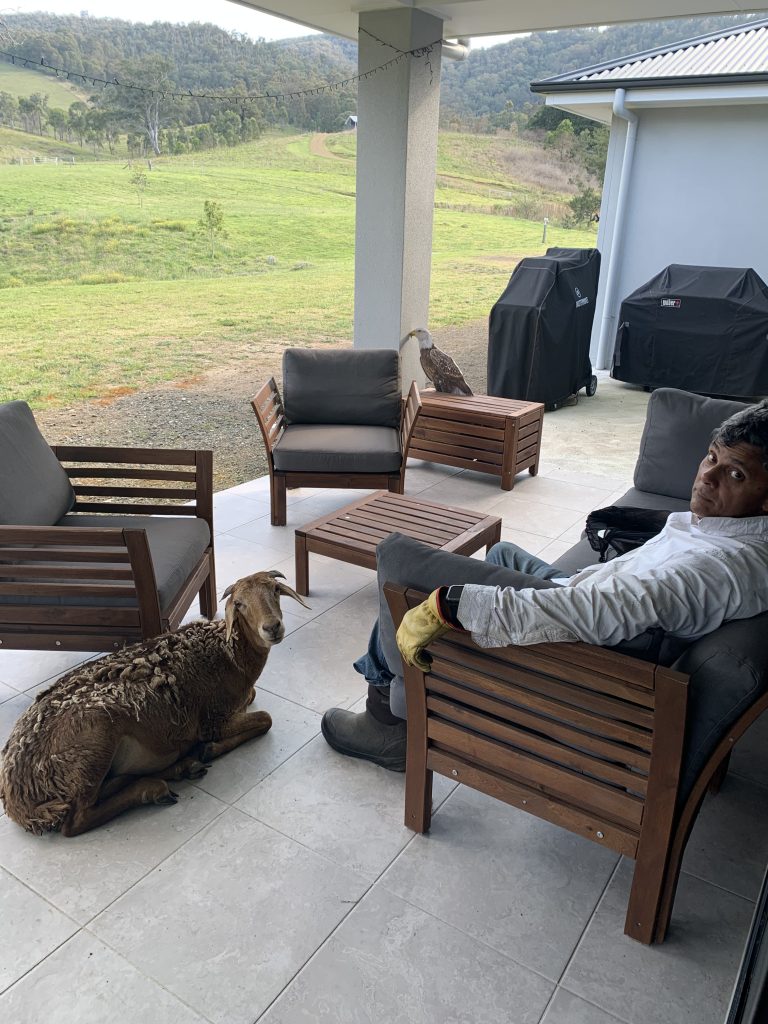
Damara sheep are calm, intelligent, and highly responsive to consistent human interaction. They are not flighty or stress-prone in handling situations. They work through standard sheep yards without drama and can be conditioned to respond reliably to feed
rewards and consistent recall cues — making paddock movement and yard work significantly more efficient.
At Hamilton Ridge, we manage our flock using calm conditioning rather than dogs or force. Our sheep respond to a consistent call and come readily to feed rewards. This is not a management trick — it is a reflection of the breed’s intelligence and social responsiveness. Once this conditioning is established, flock management becomes dramatically more
efficient.
“A relaxed animal is a productive animal. Good temperament isn’t a nice-to-have — it’s a system efficiency factor.”
This is particularly relevant for smaller or sole-operator farms where one person needs to move and manage a flock safely. The calm, trainable nature of the Damara makes this genuinely achievable without additional labour.
Grazing Behaviour — Flexibility as a Farming System Asset
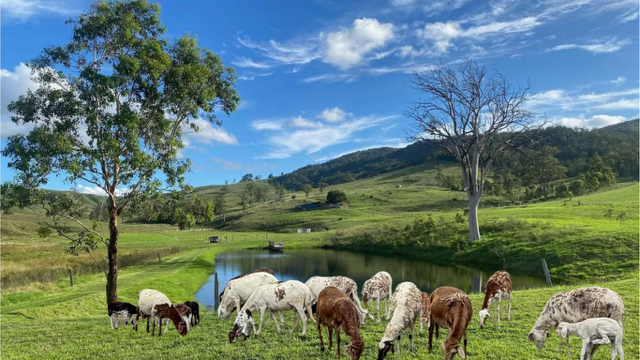
Damara sheep are highly adaptable grazers with a broad and efficient diet. They are not limited to grass-based feeding systems. They actively utilise grasses, shrubs, mixed browse, and a wide range of vegetation types — making them productive in environments where pasture diversity is more important than pasture intensity.
This grazing flexibility is a direct product of their arid-region origins, where no single feed source could be relied upon. The same flexibility makes them particularly well suited to:
- Extensive grazing systems with diverse or mixed vegetation
- Rotational and regenerative grazing programs where varied pasture is part of the system design
- Properties with variable seasonal pasture — where summer dry and winter green cycles are the norm
- Mixed farming systems where sheep integrate with cropping or other livestock enterprises
Their rumen efficiency — the ability to extract usable nutrition from lower-quality feed — means that a Damara flock can remain productive in conditions where other breeds would require supplementary feeding to maintain baseline performance. This is not a minor operational advantage. Across a flock of any meaningful size, the feed cost saving is substantial.
Damara Sheep in Australia — A Rare Breed in a Growing Market
Since their introduction into Australia in the late 1990s, Damara sheep have established a small but increasingly respected presence in the Australian livestock industry. With an estimated national population of around 500 registered breeding ewes, the breed remains
genuinely rare — which means demand for quality breeding stock consistently exceeds supply.
This rarity is not a limitation. It is a reflection of the breed’s position in the Australian market — niche, specialised, and increasingly sought after by producers who have done their research and understand what genuine low-input genetics look like.
Damara sheep have now been established across a wide range of Australian production environments:
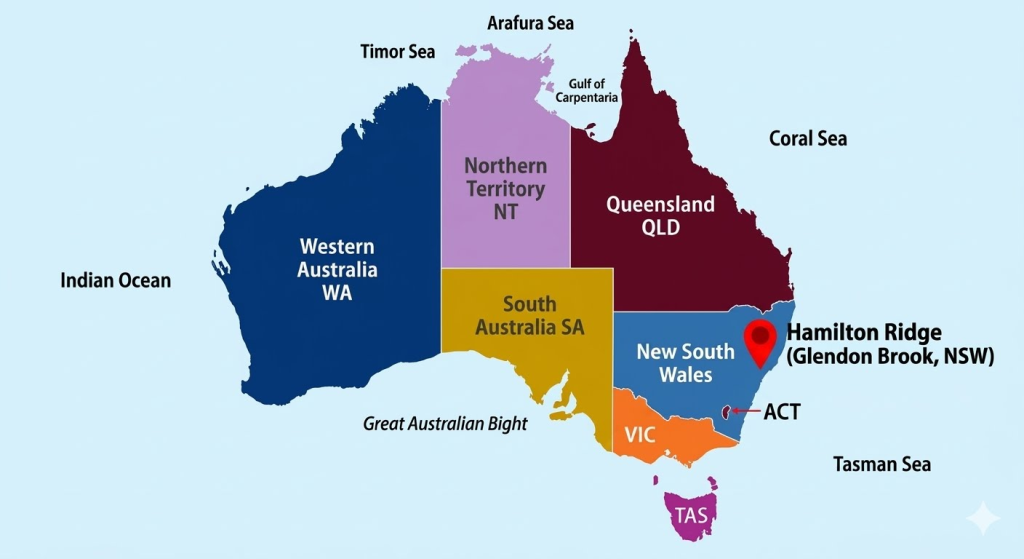
- High-rainfall coastal and tablelands regions — NSW, QLD, VIC
- Dry inland grazing systems — western NSW, SA, QLD
- Extensive pastoral country — WA, NT
- Mixed farming systems across the southern states
In every environment where they have been well managed, the consistent feedback from producers is the same: lower input costs, better drought resilience, and an animal that genuinely earns its keep.
Understanding Damara Generations — What F1 to F5 Actually Means
The Damara upgrading program in Australia is the process by which Damara genetics are progressively introduced into a base breed flock over successive generations, with the goal of producing fully upgraded purebred animals.
The generations work as follows:
- F1 — First cross. 50% Damara genetics. Shows clear Damara influence but retains significant base breed characteristics including potential wool coverage.
- F2 — Second cross. 75% Damara. More consistent Damara traits but shedding and performance can still vary significantly between animals.
- F3 — Third cross. 87.5% Damara. Increasingly resembles purebred Damara in appearance and management requirements.
- F4 — Fourth cross. 93.75% Damara. Close to purebred in most respects but not eligible for DSBSA purebred registration.
- F5+ — Fully upgraded. 96.875% Damara and above. Eligible for registration as purebred with the Damara Sheep Breeders Society of Australia.
For buyers intending to build a registered stud program or purchase genuinely purebred Damara breeding stock, understanding which generation the animals you are purchasing belong to is essential. Hamilton Ridge supplies F5+ purebred registered Damara only.
Is the Damara Sheep Right for Your Farming System?
The Damara breed is not the right choice for every farming operation. Here’s an honest summary of where they genuinely excel — and where other breeds may be a better fit.
Damara sheep are an excellent fit if:
- You run an extensive, low-input grazing system where breed resilience matters more than maximum turnoff weight
- Your property experiences variable rainfall, dry seasons, or periodic drought
- Reducing shearing, crutching, and labour costs is a priority in your operation
- You’re managing a sole-operator or small-team property where calm, manageable stock is an efficiency requirement
- You’re building a stud or breeding program and want genetics with deep natural performance foundations
- You’re in a higher-rainfall region where worm management is an ongoing cost you want to reduce
Other breeds may be a better fit if:
- You need high-volume stock quickly — Damara sheep are still relatively rare in Australia and waiting lists are common
- Your system is intensive and heavily resourced, and maximum growth rate under supplementary feeding is the primary goal
- You have established supply relationships and market access that are breed-specific
Not sure? Ask us directly. We’d rather you end up with the right breed for your system than sell you animals that aren’t a good fit. Call Keith on 0433 166 457 or send an enquiry through our contact page.
EXCLUSIVE TO HAMILTON RIDGE DAMARA BUYERS
Want to Go Deeper? Our Owner’s Reference Manual Covers It All.
If you’re serious about Damara sheep, our HRDS Owner’s Reference Manual is the most comprehensive practical guide to managing this breed in Australian conditions that exists anywhere. 29 chapters. Written from hands-on experience. Provided exclusively to Hamilton Ridge Damara Sheep buyers.
Included with every Hamilton Ridge Damara Sheep purchase — not available to the public.