


By
Margie
Comments (0)
THE ROUSEABOUT, THE MOAT AND THE GAZELLES ©
THE GRASSFARMERS
In April 1999, a Dick Smith truck rolled through the gates of a grazing property at Rosevale Qld, south-west of Ipswich, and delivered something Viv and Judy Forbes had never owned before — a hundred Merino ewes with purebred Damara embryos implanted, a flock of F1 Damara – Merino crossbreds or as Viv called them “Daminos”, and a purebred Damara ram named Waverly, mostly brown with some white markings. The coloured sheep they’d flown to Western Australia to find weren’t on that truck at all. Those arrived a few months later, in the most colourful way possible: born.
Viv and Judy had spent their whole lives around cattle. Sheep were a mystery to both of them, and Damaras specifically were a mystery within a mystery. And yet over the following eighteen years, what they built at Sherana, made it one of the most important Damara studs in the country — and what Viv wrote about building it remains some of the funniest agricultural writing Australia has ever produced.
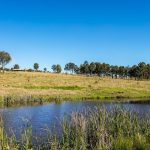
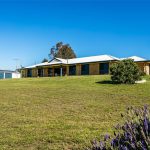
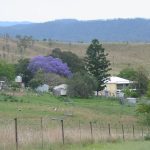
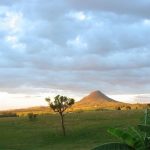
Sherana itself had started a decade earlier, in 1990, once Viv and Judy’s two children had left school and the pull of the bush finally won out over city life. They bought 300 acres of rolling basalt country at Rosevale and ran Braford cattle on cell-grazing principles, the kind of farming philosophy that tends to attract people who like doing things properly or not at all.
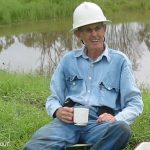
Viv himself was a hard man to sum up in one sentence, though plenty of people tried. Geologist, coal industry veteran, libertarian writer, founder of the Carbon Sense Coalition — a man whose opinions on government, on carbon taxes, and on the general uselessness of bureaucracy were never in short supply and never dull either. When a colleague once relayed that the mining magnate Lang Hancock considered Viv Queensland’s leading authority on coal, Viv’s reply was pure Viv: “I may know more than anyone else Lang knows, but that is not saying much.”
He’d helped develop the Burton Coal Mine, and the tavern at the mine village was eventually named in his honour, which tells you plenty about the impression he left on people who actually worked alongside him.
He never took a salary again after leaving Mount Isa Mines. He never went into business with anyone again either — except Judy.
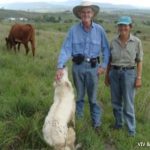
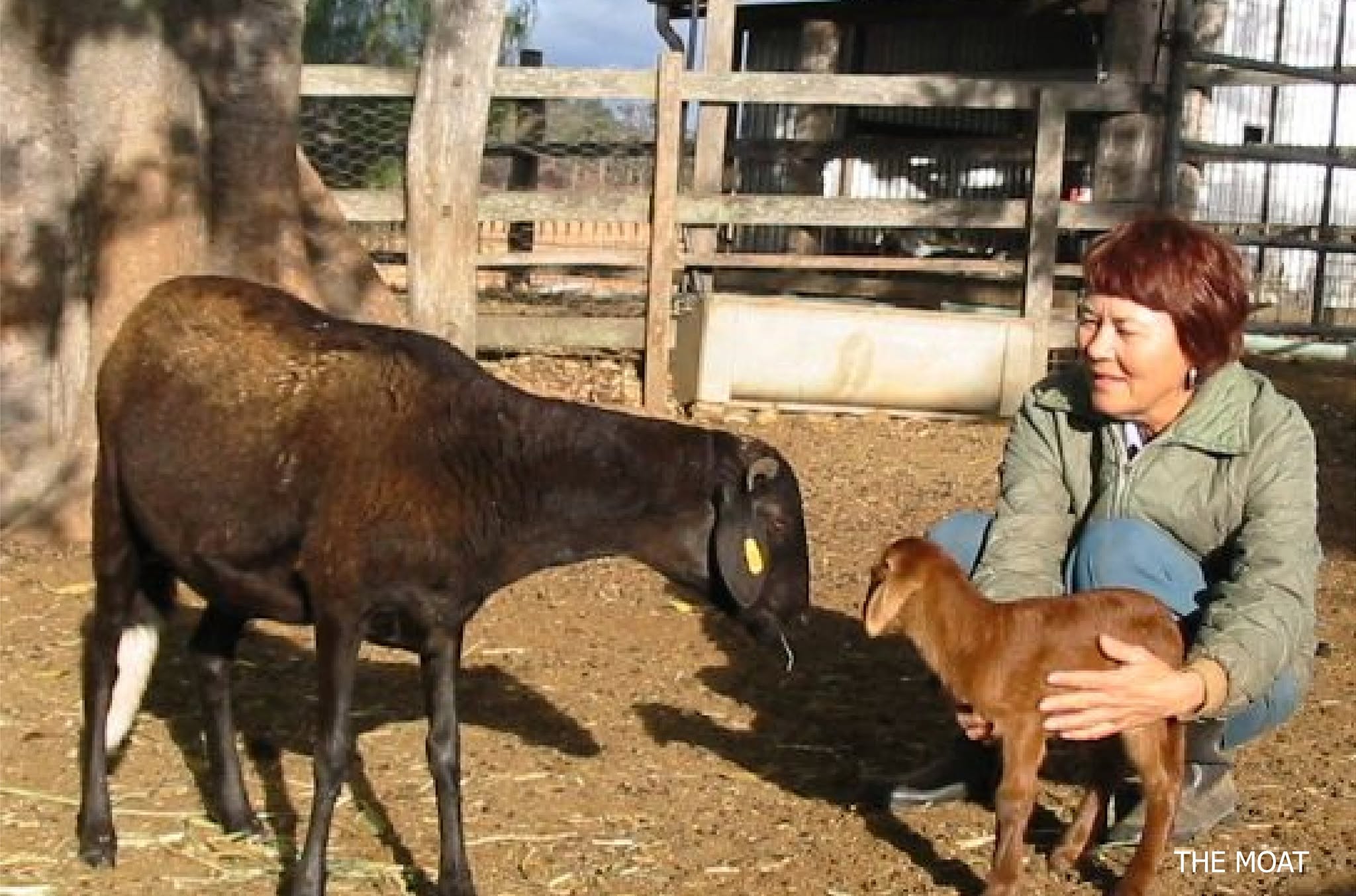
Judy grew up on a Hereford cattle property near Nebo, the kind of upbringing that produces people who don’t waste time being impressed by livestock. At Sherana she was the one who actually ran things — culling hard, keeping records nobody else could be bothered keeping, and managing the breeding program with a judgement Viv described, without a trace of irony, as the “final word on everything”. In his writings he gave himself the nickname “the Rouseabout” and gave Judy the nickname “Mother-of-All-Things” — MOAT, for short. The Rouseabout, he liked to say, fixed fences, wrote newsletters, and “occasionally got things wrong.” MOAT fixed the Rouseabout. She also noticed, every single time, when he’d fixed the wrong fence.
Neither of them had owned sheep before Sherana got its first. Viv’s only brush with the species had come decades earlier, helping a brother-in-law with a mob of Merinos — drenched with nicotine and bluestone, poured from an old beer bottle as a drench gun.
Sent out alone to muster them with no dog, he watched the whole mob bunch into a tight, useless circle in the middle of the paddock and just turn in place. “I think,” he wrote years later, “that is when I learned to swear properly.” His final verdict on Merinos, delivered with characteristic restraint, was simply: “I hated those merinos.”
So when a program on TV, one evening, showed them a strange-looking, fat-tailed, hair sheep that needed no shearing, no crutching, and apparently raised its own lambs without much help from anyone, they both looked at each other and knew they were onto something.
Recognizing a revolutionary opportunity, they flew to Western Australia to see for themselves, ending up at John Hall’s property in Narembeen WA—one of the country’s biggest and earliest Damara breeders, a man who’d be implanting embryos by the thousands before long. Viv and Judy arranged for five purebred ewes, a ram plus a hundred Merino ewes carrying implanted Damara embryos courtesy of Hall’s own rams and a flock of commercial damara crossbreeds F1, to come east. They flew home. The sheep, eventually, followed—and Sherana officially took its place in history as the first registered Damara stud in Queensland – flock number 0014.
The Merino recipients turned out to be every bit as much trouble as Viv had warned himself they’d be. “Blowfly, eye blight and spear grass,” he reported in his very first newsletter. “Also a couple died inexplicably, and another couple looked at their coloured lamb and said ‘That’s not mine’ and walked off.” They were sold the moment their lambs were weaned, with no regrets on either side.
The crossbred ewes — half Damara, half Merino — were an entirely different proposition. “Fifty percent Damara blood makes a huge difference to the merinos,” Viv noted with something close to wonder. “More alert, more agile, more intelligent, and they stick together in a flock better.” Sherana bred these up across generations, watching the wool disappear a little more with every cross, until what was left barely resembled a Merino at all.
Then came a lesson that cost them an entire breeding season. Their first purebred ram, Waverly, had cut his teeth serving Merino and crossbred ewes — and did the job well. When pure Damara ewes were eventually added to his flock, Waverly looked at these strange, coloured, fat-tailed creatures and simply refused to recognise them as sheep at all. Not one of them fell pregnant. “He had his own grey wives,” Viv wrote, “with no awkward tail in the way.” The flock was split immediately, a fresh ram brought in for the purebreds, and a rule was written into Sherana folklore for good: introduce a Damara ram to Damara ewes first, and he’ll happily serve crossbreds added later. Do it the other way round, and you’re asking for trouble.
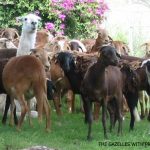
They also bought Dorpers at an auction, chosen largely because the Rouseabout liked their look. They were fashionable and fattened well, but in practice, they treated every fence as a personal challenge. MOAT’s own verdict on the two breeds was, as ever, delivered without room for argument: “Why did we buy them – Damaras are the gazelles of the sheep world. Dorpers are the Hippos.”
THE ICE BABIES
Friends of Viv and Judy’s, John and Mary Te Kloot, ran Damaras of their own on a property called Marmboo near Longreach Qld, and somewhere along the way they’d ended up with a hundred frozen Damara embryos sitting in liquid nitrogen — embryos harvested years earlier from pure ewes belonging to a respected South African breeder named Petra Scholtz. The Te Kloots had never gotten around to using them. They’d been sitting in a storage facility at Beaudesert Qld, for thirteen years.
Given how tightly Australia controls the import of live sheep genetics, those embryos weren’t just old stock sitting in a freezer. They were genuinely irreplaceable. Viv and Judy decided someone had better do something about that before the opportunity disappeared for good.
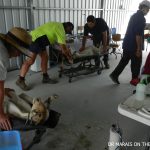
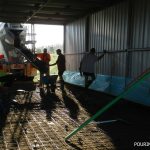
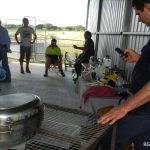
They bought fifty-five Damara/Dorper cross ewes from a trusted New South Wales breeder, emptied out a shed, poured a fresh concrete floor, built temporary yards, and got the recipient ewes synchronising on schedule. Judy made a big pot of stew, because whatever else happens on a property like Sherana, nobody goes hungry. Three extra men turned up to help, and the vet arrived — a man recommended to them as the best in the country for exactly this kind of work.
He looked over the paperwork and went very quiet.
He’d harvested these embryos himself. In South Africa. Thirteen years earlier. He recognised his wife’s handwriting on the original collection forms. Dr Francois Marais had immigrated to Australia from South Africa in that time.
Dr Marais — the very man who’d taken these embryos from a flock on the other side of the world more than a decade before — was standing in a shed in Queensland, about to give them their first chance at life.
The implant went ahead on the 30th of April, 2013. Of the hundred embryos, ninety-seven were viable enough to implant across fifty ewes. Thirty-two of those ewes took. The first lamb arrived on the 16th of September, the last on the 24th — forty-nine lambs in total, sixteen sets of twins among them, with forty-four surviving through to weaning. Viv, never one to dodge an awkward number, admitted afterward: “We have not yet been brave enough to work out the cost per lamb on the ground.”
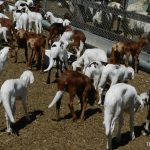
Judy, when asked how the lambs themselves turned out, didn’t sugarcoat it. They were long-legged, rangy, and carried a lot more white than she’d have liked. “I have always preferred more colour,” she told us — which is about as close to a complaint as Judy gets. But the bloodline had survived thirteen years frozen in a tank and came out the other side alive and breeding. Viv called it, with real weight behind the words, “possibly the last Damara genetics that will get into Australia from Africa.” The name for the whole project chose itself. They called them the Ice Babies.
Ebony — one of Sherana’s very first embryo lambs — lost her birth mother during a difficult delivery, and Judy ended up raising her by hand with absolutely no plan for what came next. Ebony grew into one of the most productive ewes Sherana ever bred, and at the Brisbane Ekka (field day) in 2003 she bleated so loudly for Judy that they brought traffic on Ann Street to a standstill. “One girl, looking back over her shoulder, went right across Queen Street against the lights,” Viv recorded with evident delight.
By 2010 and 2011, word had spread far enough that enquiries were coming in from Indonesia, the Philippines, the Northern Territory, New South Wales, and Victoria, all chasing pure Damara genetics in numbers Sherana simply couldn’t supply. Judy put it about as plainly as it can be put: “We were the biggest around in the east.”
But by 2017, after everything — the embryos, the years of building, the flock that had grown bigger than anyone expected — Viv and Judy were sitting at dinner one evening, and Viv finally said the thing they’d both been quietly thinking for a while.
A CONVERSATION OVER DINNER
Viv and Judy were having dinner at what Judy still calls, with a small laugh, a “posh” restaurant, when Viv put down his fork and asked the question they’d both been avoiding for months. “What do you think of selling here, and going somewhere smaller?”
Judy didn’t hesitate. “What a great idea.”
Neither of them had wanted to be the one to bring it up. As it turned out, neither needed to be talked into it either.
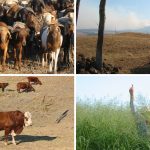
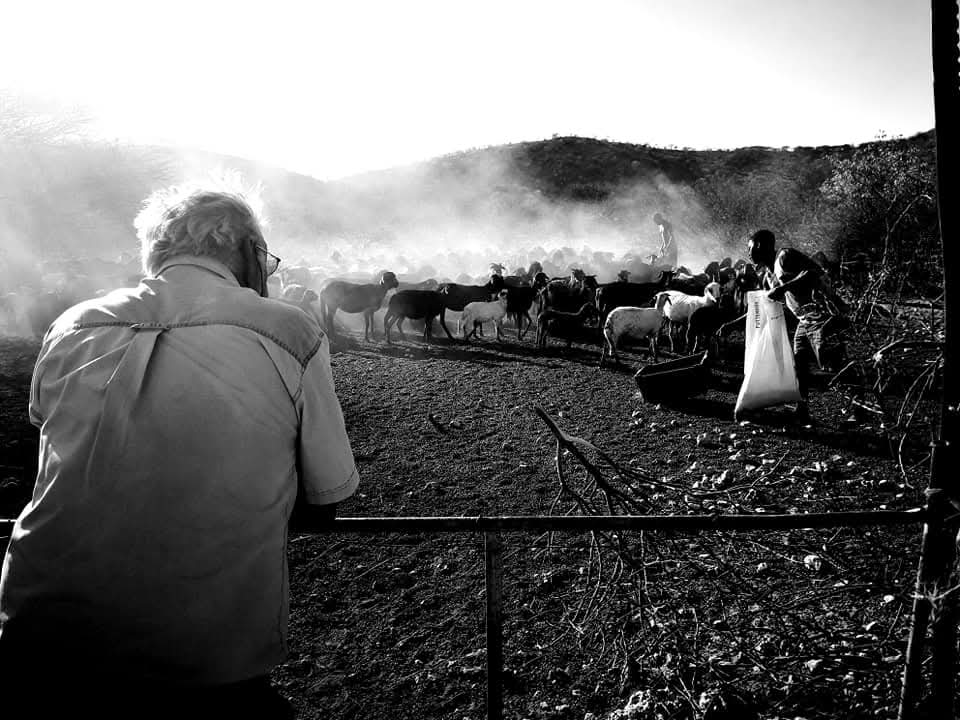
True to form, they didn’t drag the decision out. Within five months they’d sold Sherana — the only home either of them had known for twenty-seven years, longer than either had stayed anywhere in their lives — and bought a much smaller place called Hilltop, forty acres, half an hour closer to Brisbane and considerably easier country to manage. The cattle went to auction. The sheep flock was wound down gradually. Judy had to choose just eighty animals to take with her, out of a flock that had once run into over five hundred, and it was not an easy afternoon. Six milking goats and the old guardian llama made the trip too.
On the 17th of August, 2017, Viv and Judy Forbes loaded up sheep, goats, and one very patient llama, and drove away from Sherana for good.
At Hilltop they kept right on breeding, just on a smaller scale, selling small mobs through the local saleyards whenever numbers crept up. “Moving was sad but a relief,” Judy told us. “We could no longer cope with that much work. We had some of the best sheep ever by then.”
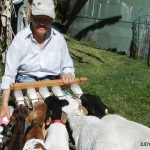
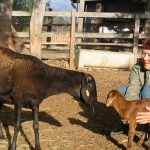
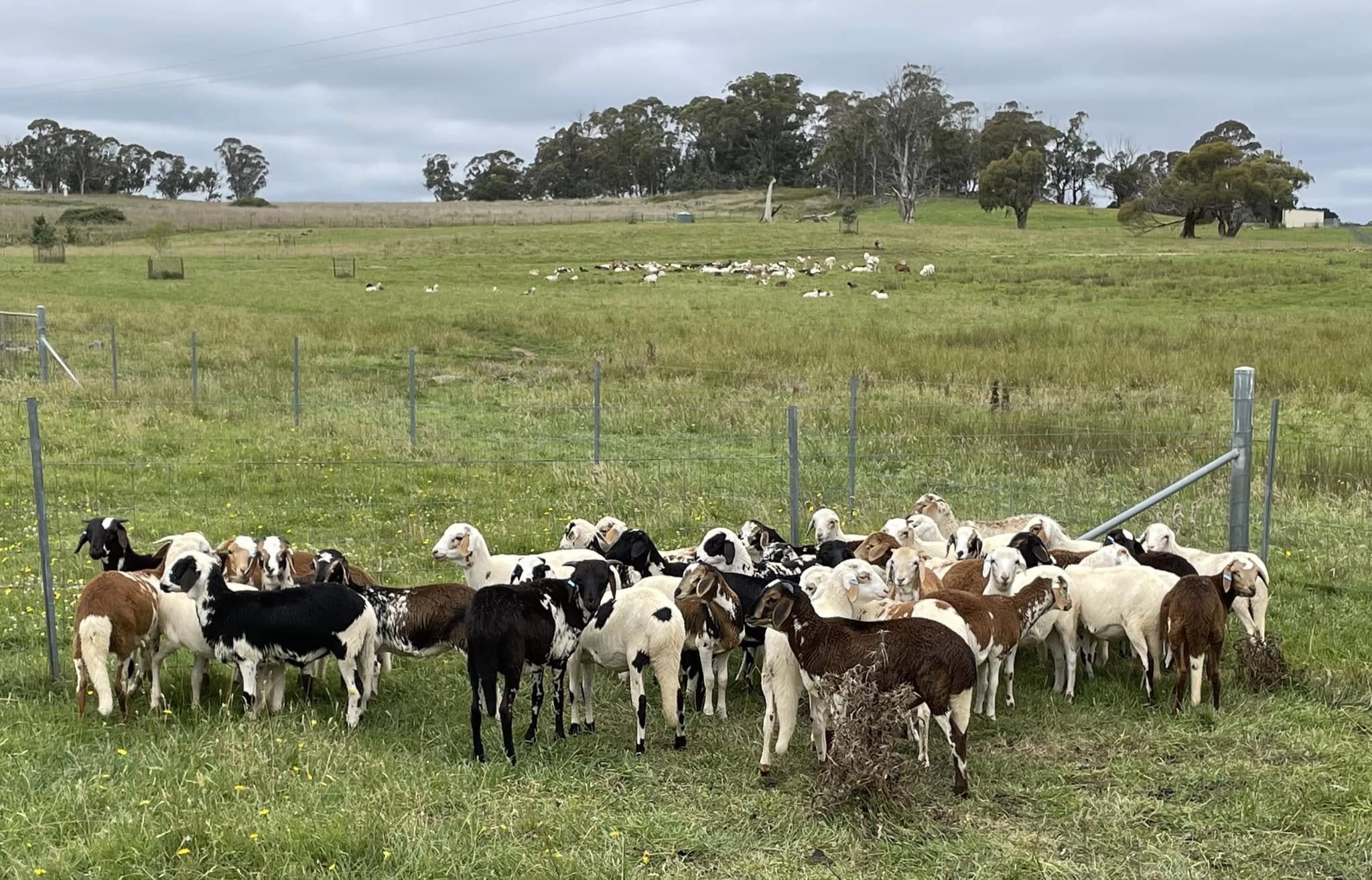
Eventually the time came to let the rest of the flock go for good. The remaining sheep went to a trusted northern New South Wales connection who’d been part of the Sherana story for years. He drove up to collect them, and the weather did its best to make the trip memorable — it rained the entire weekend, and once the sheep finally made it home, it snowed on top of all that. Only one Sherana lamb was lost in the cold, along with one of his own ewes. By then Judy had decided to move in with her daughter, Lisa and grandchildren. The lambs that had been born just before the move were gifted to Lisa, to be raised on the bottle. It was her granddaughters who ended up doing most of the feeding — the lambs were a little old for the bottle by that stage, if truth be told, but nobody seemed to mind in the slightest. “The girls loved doing it,” Judy says with a smile, “Me too.”
Sherana never really closed, not in any official sense. As Judy puts it, simply: “We just didn’t have any more sheep.”
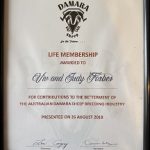
Viv and Judy were made Life Members of the Damara Sheep Breeders’ Society of Australia, in August 2018 in recognition for a contribution that reached well beyond their own paddocks. Between them they proved a Damara could thrive anywhere in this country — subtropical Queensland hills, the snow country of inland New South Wales, drought, frost, whatever the weather decided to throw at it. They proved the breed could be steadily improved through patient, careful selection rather than guesswork. And they documented every bit of it, for nearly two decades, with more humour and more honesty than anyone had any right to expect from a couple of written documents about sheep.
Viv Forbes passed away on the 15th of November, 2025, at the age of 86 — geologist, coal man, grazier, writer, libertarian, and for eighteen years the Rouseabout at Sherana. Every single newsletter he ever wrote signed off with the same four words: “All Sheep are Green.”
Judy remains a Life Member of the Society today, and she remains, by any honest measure, one of the most important figures in the entire history of the Damara breed in this country. The genetics she and Viv pieced together over eighteen years — the Ice Babies, the wild TeeKay girls, the closed-herd lines, the drought-sale rescues, every good ram they could track down anywhere in Australia — are still out there, still breeding, in flocks that in some cases have no idea where their own bloodlines began. What Viv and Judy built was never really about Sherana the property at all. It was about the breed itself surviving, and going on to thrive; it was about giving the Damara a permanent footing in Australia, ensuring it would flourish long after they had downsized and passed the torch to the next generation of breeders.
It has been an absolute privilege to tell their story.
© Written by Keith Layman, Hamilton Ridge Damara Stud, NSW
Photographs © courtesy of Judy Forbes, Sherana Damara Stud