


Having brought our little flock to Hamilton Ridge Damara Stud, it was time to get serious about how to properly contain and care for our growing “family.” What had begun as a dream—owning sheep, nurturing them, watching them thrive on our own patch of land—quickly evolved into a practical lesson in livestock management, paddock planning, and predator control. Hamilton Ridge Damara Stud is beautiful, but it is also rugged and unpredictable, and we understood very early on that good intentions alone would not keep our sheep safe. Infrastructure, planning, and secure fencing would be the foundation of everything we did.
Our first priority was designing a paddock system that worked not only for containment, but for flock health and pasture management. We determined the need for multiple paddocks to give us flexibility and control. Rotational grazing became a key principle in our planning. By creating several paddocks, we could separate our Ram with his companions—three loyal wethers—when necessary, allow certain paddocks to rest and regenerate, and establish dedicated sleeping quarters. We also needed to plan ahead for lambing season, which meant designing a nursery paddock where ewes and newborn lambs could feel secure and undisturbed.
The ability to separate the Ram from his “ladies” was particularly important. Anyone who runs sheep understands that flock growth needs to be intentional. While increasing numbers can be exciting, it must align with feed availability, paddock capacity, and overall farm management goals. Strategic separation gives you control. It also allows the ewes to recover and maintain condition without the constant presence of a determined Ram.
However, fencing at Hamilton Ridge Damara Stud is not just about managing sheep—it is about protecting them. We have a significant wild dog problem in the area. We have seen them on the property and, unfortunately, have had to shoot some. It was a stark reminder that predator security is not optional; it is essential. A single breach can have devastating consequences for a small flock. So, security for our sheep became a top priority.
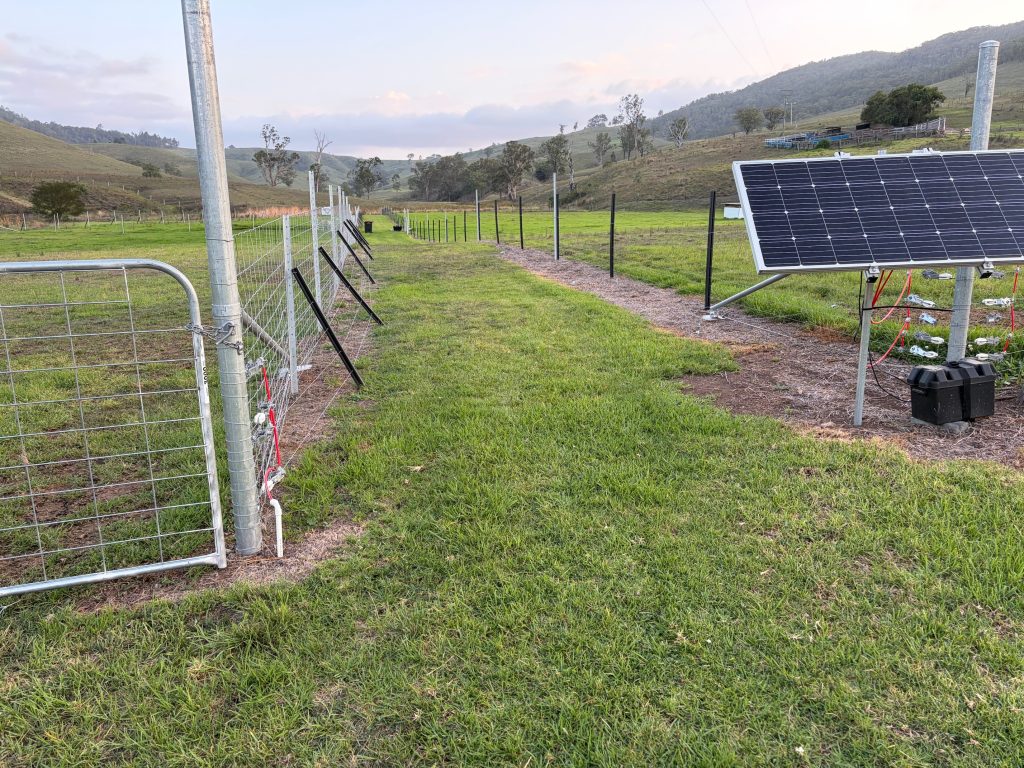
After extensive research into livestock fencing options, we determined that a solar electric fence system would provide the best combination of reliability, efficiency, and adaptability. We selected a JVA energiser for its strength and monitoring capability. We had previously used a smaller Gallagher system with our temporary fencing, and it had been fantastic—reliable, user-friendly, and effective. But for a more permanent perimeter fence, we needed something robust, scalable, and smart-enabled.
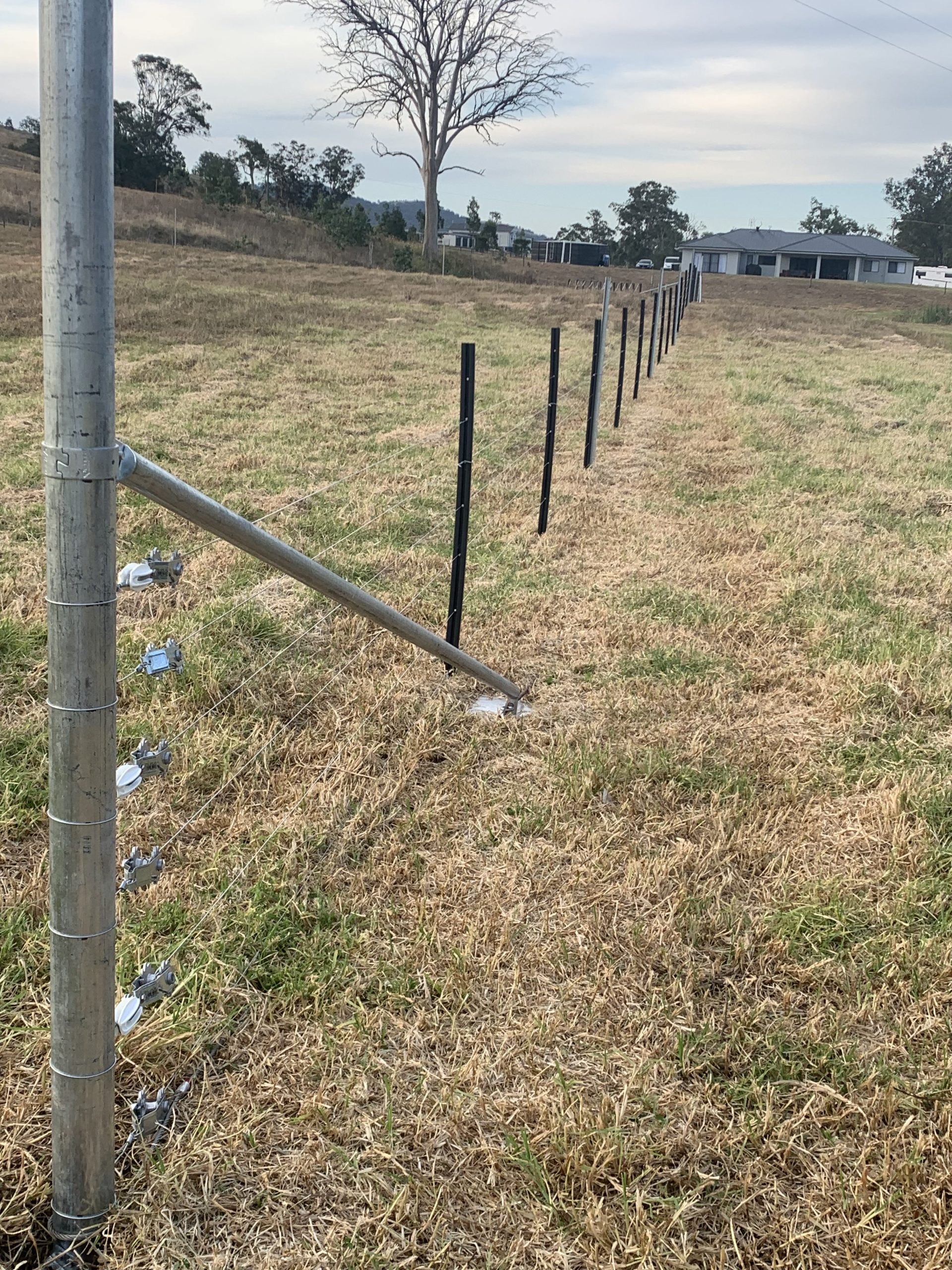
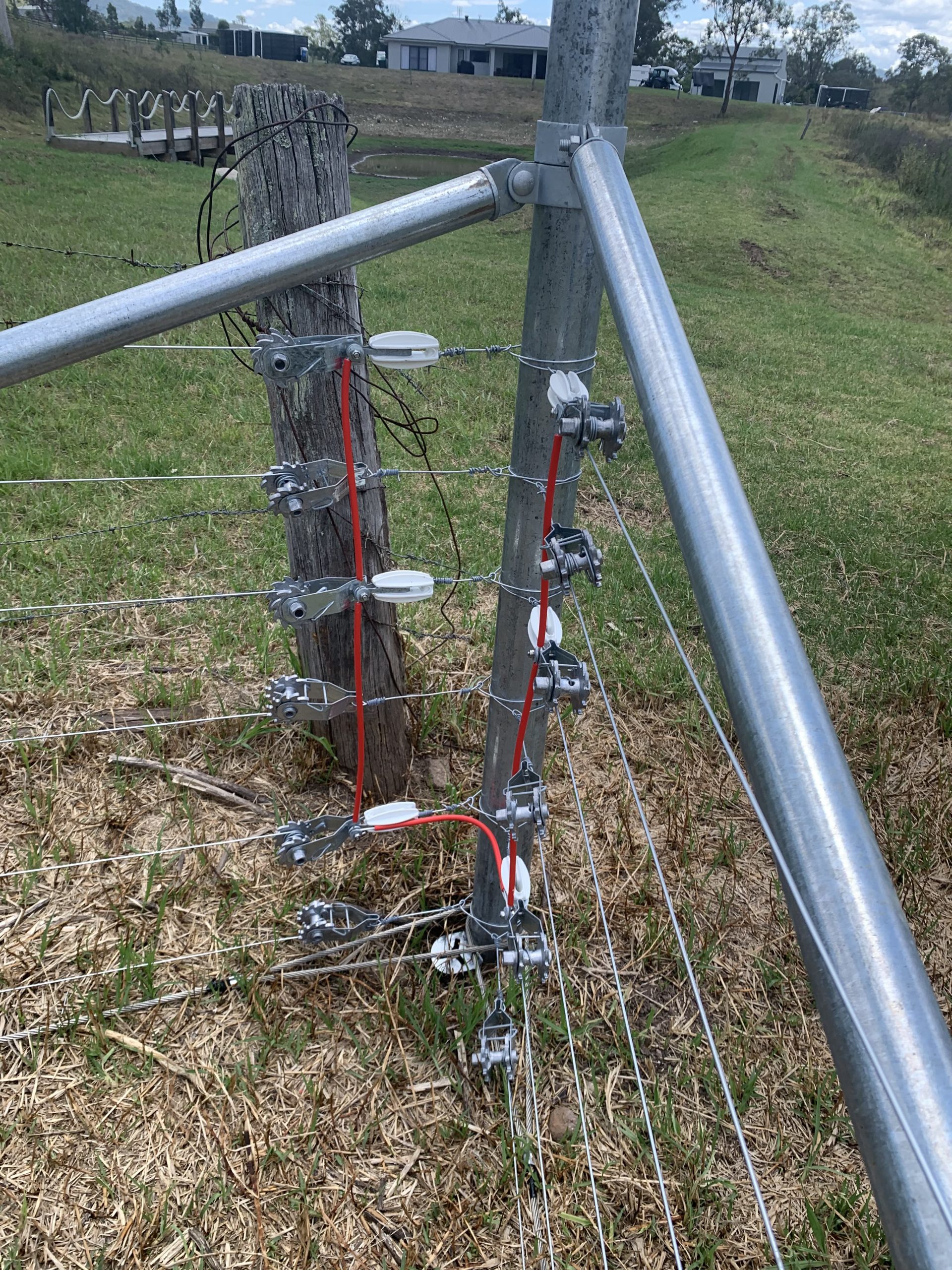
The addition of a WestonFence post system was another deliberate decision. WestonFence offers flexibility and durability, and it allowed us to design a multi-wire electric configuration tailored to our needs. One of the major advantages of the JVA energiser was the monitoring app. Being able to check fence voltage directly from our phones provided peace of mind, especially when we were off-site. Combined with battery back-up and solar panels, the solar electric fencing solution was both sustainable and practical for our rural property. It gave us independence from mains power and reassurance that our livestock protection would continue even during outages.
In January 2025, with summer heat pressing down on us, we began installing a six-wire WestonFence system. This was no small task. With the invaluable help of Odette—Keith’s sister—and Tony, who generously took on the role of full-time chef while we laboured in the sun, we constructed a perimeter fence designed to enclose a primary paddock. Our aim was ambitious: keep wild dogs and kangaroos out, while allowing the sheep to graze freely and remain overnight without needing to be locked up every evening.
The six-wire electric configuration was specifically designed to deter predators. The voltage, sitting at around 9.4 kilovolts when fully operational, was more than sufficient to dissuade most animals from testing the boundary more than once. Or so we thought.
While the wild dogs respected the fence, the kangaroos proved to be another story entirely. Kangaroos are powerful, determined, and seemingly indifferent to electric deterrents when motivated by feed. They would push through the fence, occasionally jumping over, and in doing so would bring the fence voltage down. Watching the app drop from 9.4 kilovolts to a compromised level was enough to shake our confidence in what we had optimistically dubbed our “bullet-proof” fence.
Although the kangaroo breaches were not catastrophic, they undermined the integrity of the system. A fence that is partially down is no fence at all when it comes to wild dog security. Confidence in your infrastructure is critical in livestock management, and ours had taken a hit.
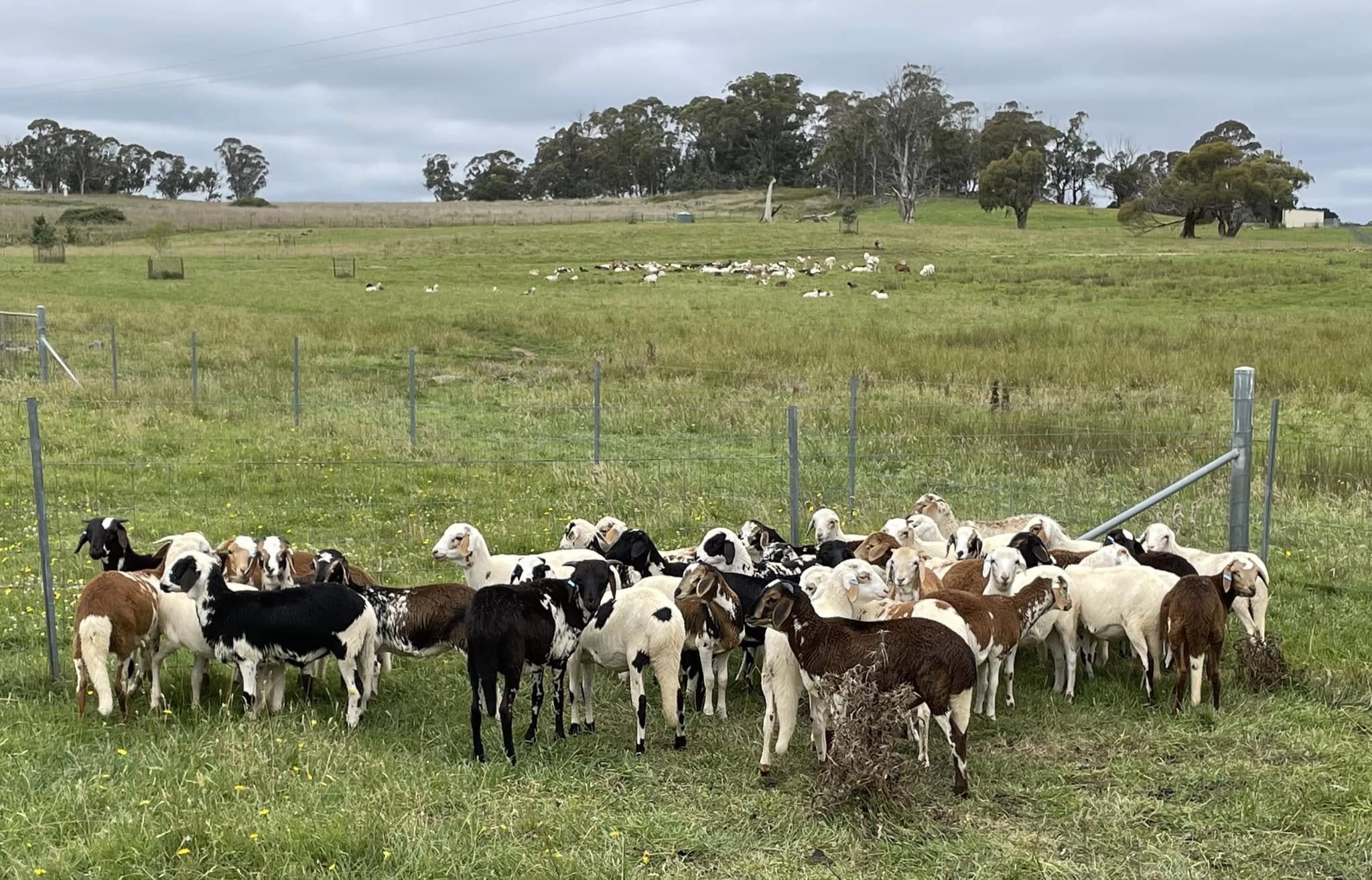
Of course, whenever you are working on a property, you are never truly alone. The ever-present “Site Supervisors”—our sheep—were always nearby, carefully inspecting every post, every wire, every tool left unattended. Their curious eyes followed our movements with what felt like genuine evaluation. If sheep could offer performance reviews, we would have received plenty of constructive feedback.

Recognising the limitations of the initial paddock setup, we adjusted our management strategy. The primary electric paddock became ideal for daytime grazing when we were present on the property. However, for overnight security, we reverted to placing the dog fence inside the paddock and continued locking the “boys” into their secure enclosure. We also constructed a separate enclosure for the “girls,” ensuring their safety during vulnerable hours.
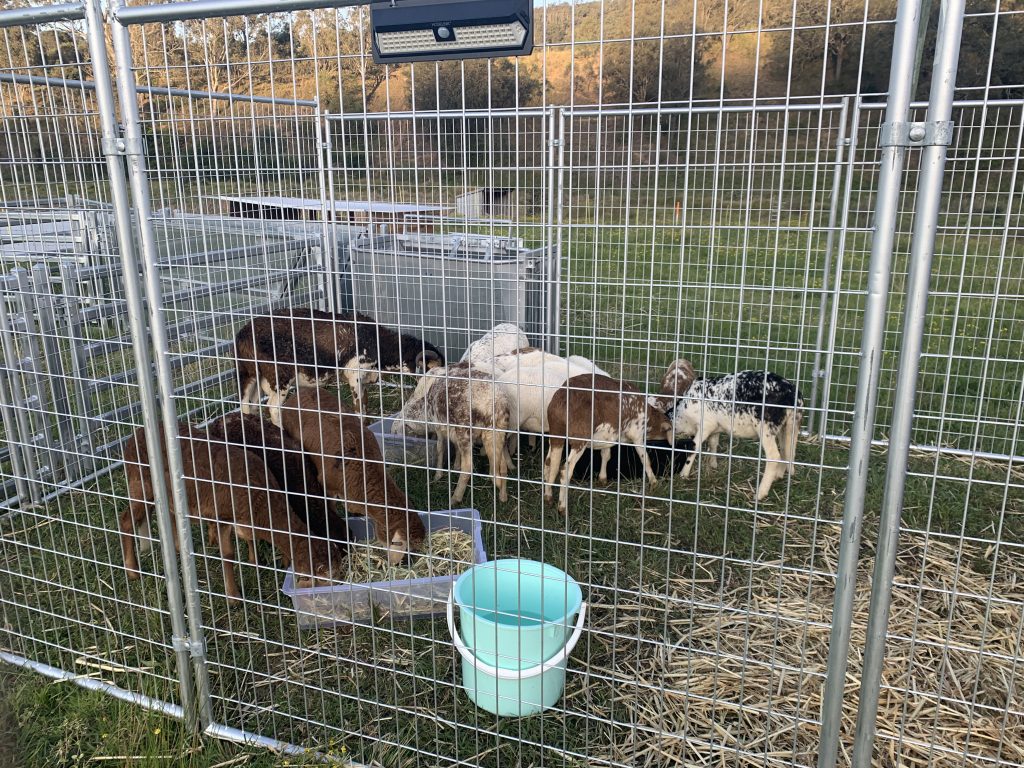
Over time, we refined our fencing package further. Experience is a powerful teacher. We incorporated a straight run of Whites stiff stay wild dog mesh fencing—a heavy-duty, physical barrier known for its durability and effectiveness against predators. This mesh fencing formed the core of what we affectionately named “Sleepy Hollow,” our dedicated overnight housing paddock.
To enhance the predator deterrent capability, we added an off-set WestonFence perimeter with a four-wire electric component. The combination of stiff stay wild dog mesh and electric fencing created a dual-layer protection system. The physical barrier prevented penetration, while the electric offset discouraged climbing or leaning. It was a far more secure configuration, particularly for periods when we were not at Hamilton Ridge Damara Stud.
We positioned Sleepy Hollow opposite the original paddock to facilitate easy and safe sheep movement. Practical layout planning reduced stress—for both sheep and humans. Moving livestock efficiently minimises injury risk, saves time, and supports calm flock behaviour. An electric dividing fence within Sleepy Hollow allowed us to keep the Ram and his wethers separate from the Ewes whenever flock expansion was not on the agenda.

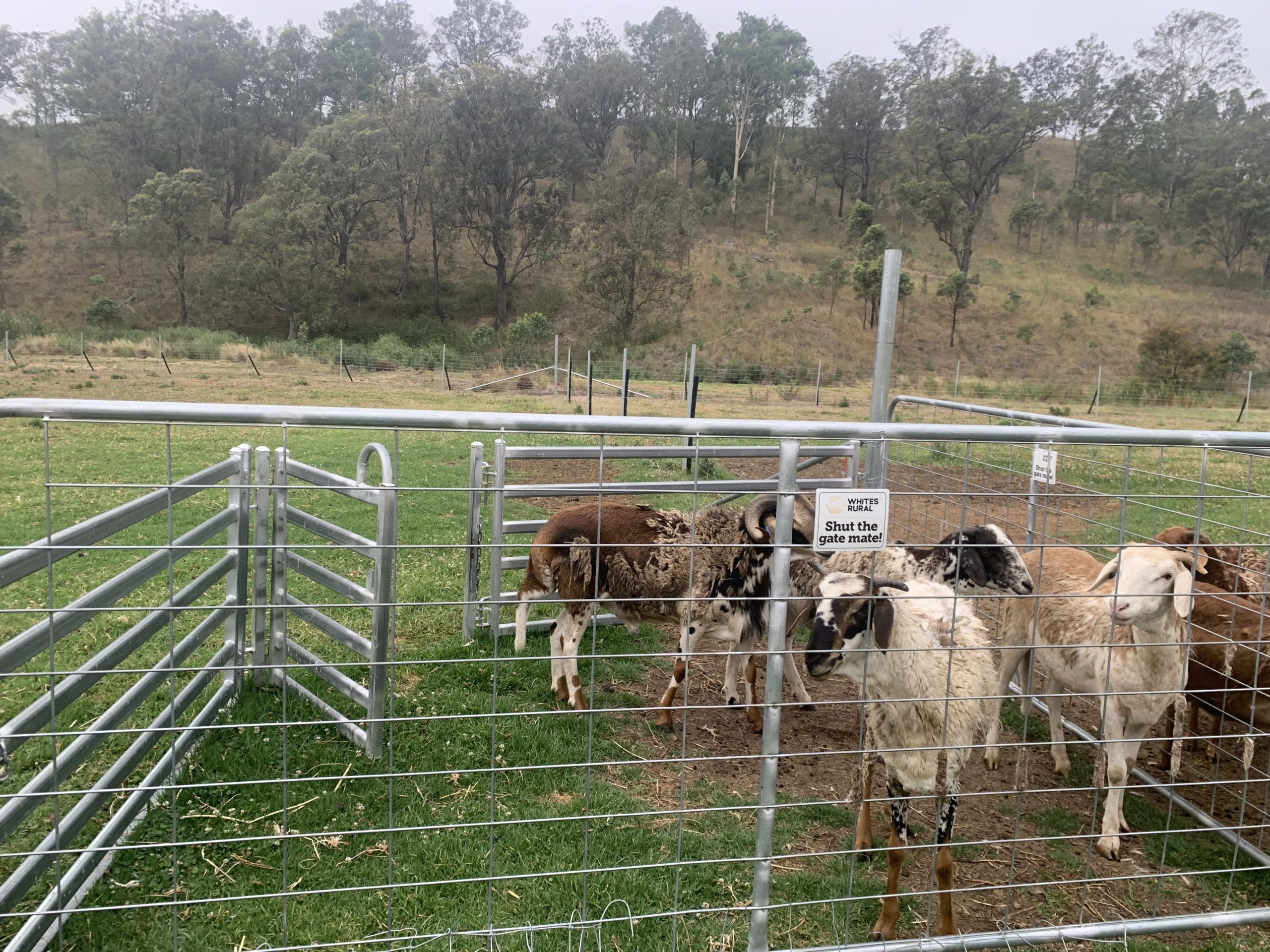
Separating the Ram introduced another learning curve. When moving his gang into the main paddock, we quickly realised we needed a transition zone. Without one, movement felt chaotic and potentially unsafe. We repurposed our sheep yard panels and gates to create a secure holding corridor between paddocks. This transition zone became a game changer. It provided a safe working space for us and controlled flow for the sheep. Accessing the “girls” paddock within Sleepy Hollow became far less stressful and far more efficient.
Working with Damara sheep has its own unique challenges and delights. They are inquisitive, alert, and surprisingly intelligent. They observe everything. We discovered very quickly that gates must be chained securely—properly and firmly. If not, the Damaras will test them. Both the “girls” and the “boys” have successfully opened gates on more than one occasion. Underestimating sheep is a mistake we will not make again.

By late 2025, lambing season was approaching, and preparation shifted toward creating a nursery paddock near our newly built Shambino Shack. Timing and proximity to the main farm buildings influenced our fencing choice. For speed, strength, and reliability, we opted to enclose the nursery paddock entirely with Whites stiff stay wild dog mesh. Its close spacing and rigid structure offered excellent protection for vulnerable lambs.
One of the advantages of the fencing systems we have implemented is adaptability. Should we determine that additional predator deterrence is necessary, we can easily add an off-set electric WestonFence configuration to the mesh perimeter. The infrastructure is modular, giving us flexibility as conditions change.
Looking back, the journey from a simple paddock to a layered livestock security system has been both humbling and rewarding. We have learned that effective sheep management requires more than feed and water. It demands thoughtful paddock rotation, strategic separation, reliable solar electric fencing, strong wild dog mesh, and constant vigilance.
Hamilton Ridge Damara Stud has taught us resilience. It has reminded us that infrastructure underpins animal welfare. And it has reinforced that while wild dogs and kangaroos may challenge our fences, thoughtful design, research, and adaptability ensure our little flock remains safe, secure, and thriving.
Our “family” continues to grow, and with every post driven and every wire tensioned, we are building not just fences—but a sustainable future for our sheep at Hamilton Ridge Damara Stud.