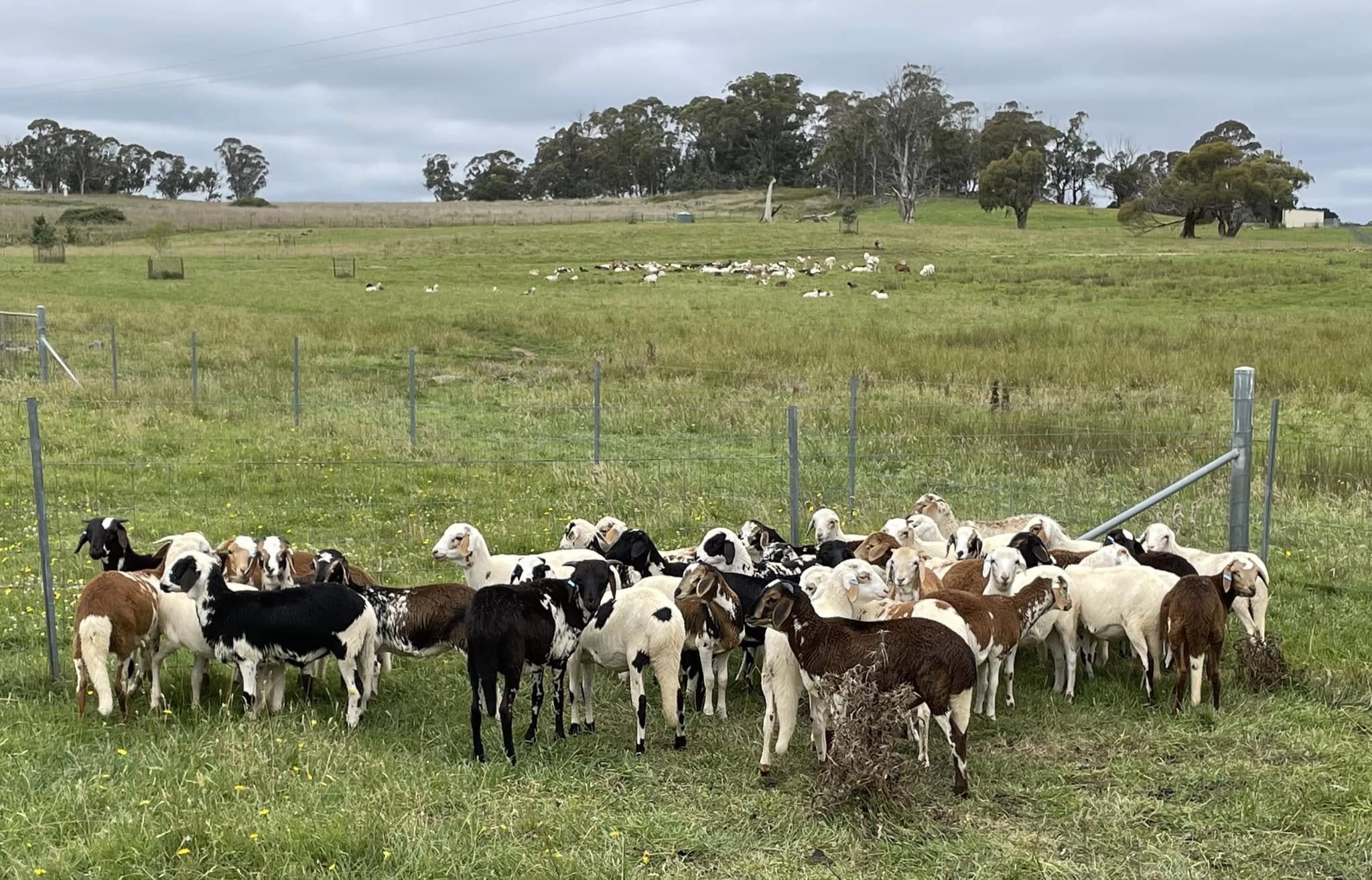




For the first few months at Hamilton Ridge, our little flock lived together in what could only be described as peaceful harmony. While we worked steadily on building our fenced infrastructure—installing paddocks, reinforcing boundaries, and establishing Sleepy Hollow—the sheep grazed as one contented unit. There was something deeply reassuring about seeing them spread across the pasture together: Malachi standing tall and proud, his loyal band of wethers—Devon, Alfee and Dunbar—never far from his side, and the ewes grazing calmly around them.
Those early months gave us time to observe personalities, social bonds, and flock dynamics. It also gave us breathing space while we focused on the practical side of property development. Fencing, as we had already learned, is not something you rush. A secure, well-designed paddock system underpins everything else—animal welfare, predator protection, pasture management, and breeding control. And breeding control was exactly what prompted our next major decision.
As much as we loved seeing the flock together, we knew the time would come when we had to separate the Ram and his mates from the ewes. Allowing them to remain together year-round would mean no control over mating, lambing timelines, or flock growth. We were determined that our first lambing season would be intentional, well-timed, and properly managed. No “accidents,” no surprise lambs arriving in a poor feed season, and no unnecessary stress for the ewes.
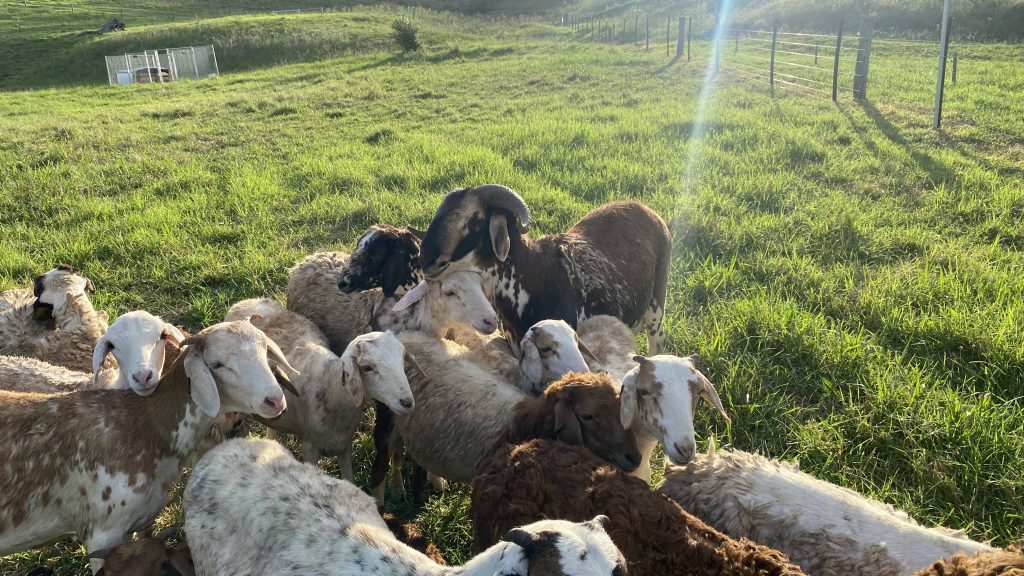
By the time both the main paddock and the two sides of Sleepy Hollow were nearing completion, we knew it was time. The infrastructure was finally in place to support a permanent split. Sleepy Hollow, with its secure fencing and internal electric division, was designed precisely for this moment. One side for the girls, one side for the boys. Safe, separate, and manageable.
Still, knowing something is necessary does not always make it easy.
The day we made the split was surprisingly emotional. For months, the flock had moved, grazed, and rested as a single social unit. We had watched friendships form and routines develop. Now, we were about to disrupt that rhythm.
Some members of the flock took the separation in their stride. Sheep are often more adaptable than we give them credit for. A new gate, a different paddock, and after a few exploratory laps along the fence line, they resumed grazing as if nothing much had changed.
Others, however, were far less impressed.
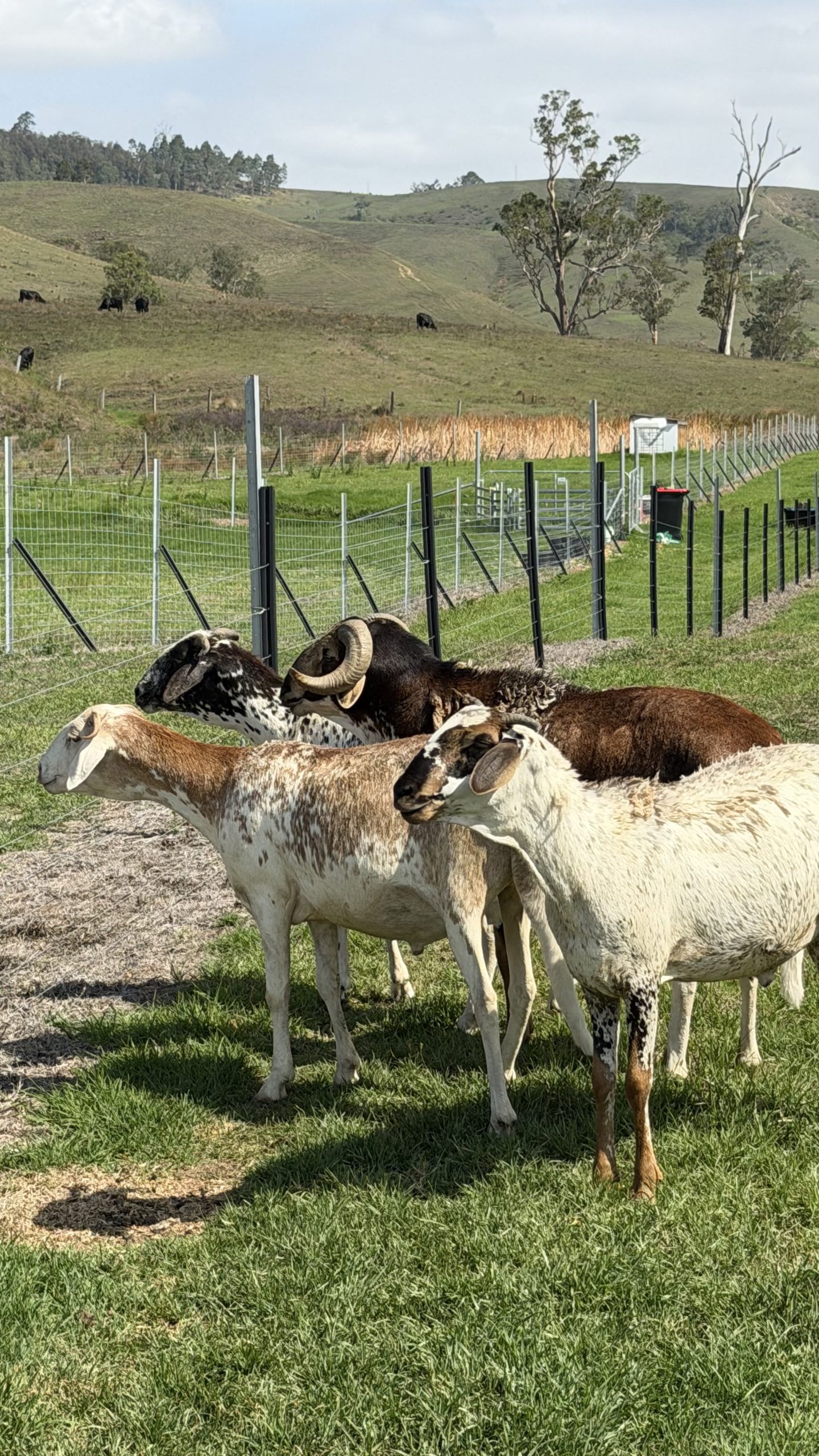
Malachi, our Ram, made his feelings abundantly clear. Used to overseeing his ewes with quiet authority, he was not particularly thrilled with his new living arrangements. The moment the gate closed between him and the girls, he stationed himself along the dividing fence, watching intently. His posture said it all: alert, mildly indignant, and unwilling to accept this sudden injustice without protest.
Devon, Alfee, and Dunbar—his ever-faithful companions—remained close. The four of them formed a tight bachelor group, pacing the fence line, observing the ewes on the other side as though strategising a reunion. If sheep could sigh dramatically, I suspect we would have heard it that week.
Isabelle, one of our more expressive ewes, also appeared unsettled. There was calling back and forth at first—low bleats carrying across Sleepy Hollow as each side adjusted to the new arrangement.
For a few days, the energy felt different. Not chaotic, but unsettled. It was a reminder that flock dynamics run deeper than simple proximity. Social bonds matter.
But as is often the case in farming, routine becomes the great stabiliser.
After a couple of weeks, the separation became the new normal. The fence that once felt like a dramatic divide became just another feature of the landscape. The boys established their own grazing pattern. Curiosity replaced frustration.
Of course, that didn’t mean Malachi and his gang stopped watching.
There is something quite comical about four Damara boys lined up along a fence, gazing across at the ewes as though watching the world’s most captivating show. Malachi stands front and centre, Devon slightly to the side, Alfee and Dunbar flanking like loyal guards. They are always aware of where the girls are, even if they pretend not to be. This awareness and the flocking behaviour is instinctively Damara and although separated is always prevalent with this breed.
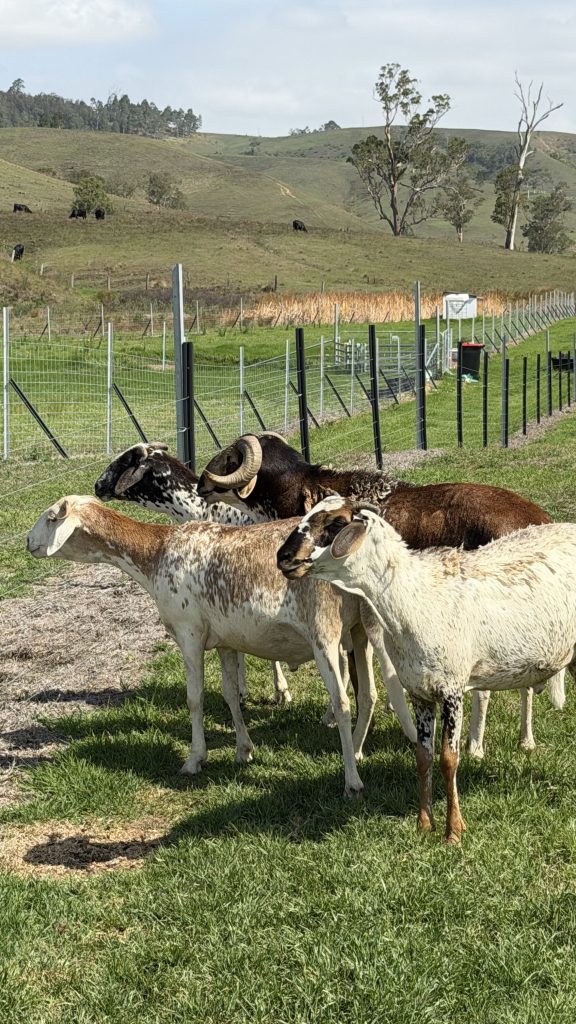

Devon, the friendliest of the wethers, perhaps felt the separation most keenly at first. Before the split, he and Leia were inseparable. Wherever Leia grazed, Devon was not far away. They would rest in the same patch of shade, wander side by side, and generally operate as a duo within the larger flock.
Now, Devon’s days are spent with Malachi and the other boys. To his credit, he adjusted well. The bachelor paddock has its own hierarchy and social structure. Wethers often act as stabilisers within a ram group, and Devon, Alfee, and Dunbar provide steady companionship for Malachi.
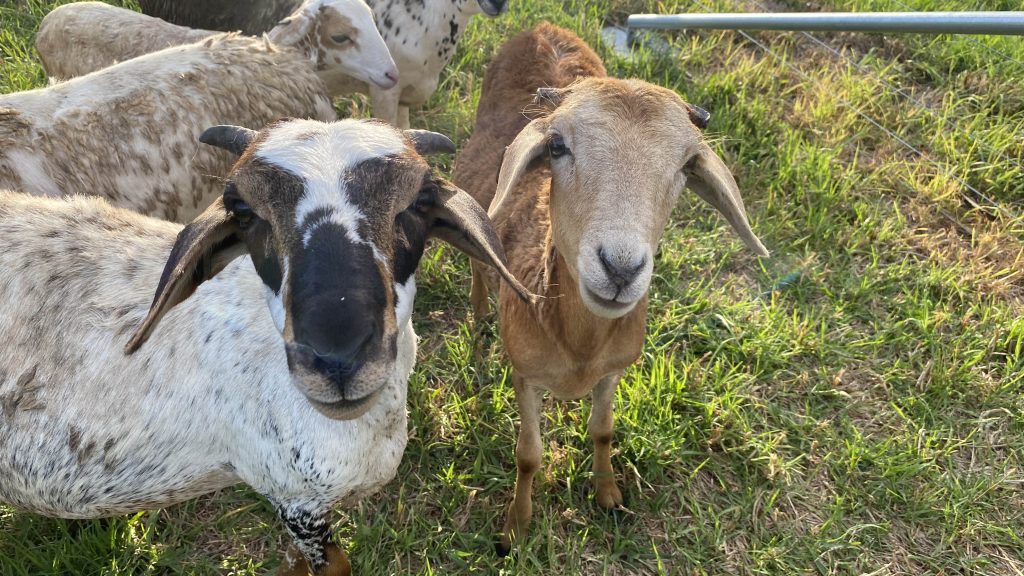
On the other side, the ewes free graze with far less drama. They move across the pasture in a relaxed, purposeful way—heads down, selecting the best grasses, occasionally lifting their gaze to assess their surroundings. They are independent, confident, and surprisingly compliant.
One of the unexpected joys of this stage has been discovering just how manageable the ewes are when grazing freely around the property. Unlike the boys, who are more inclined to test boundaries or become distracted by the mere sight of the opposite paddock, the girls are wonderfully responsive. They come when called—most of the time.
And when calling doesn’t quite do the trick, we have a very reliable backup plan.
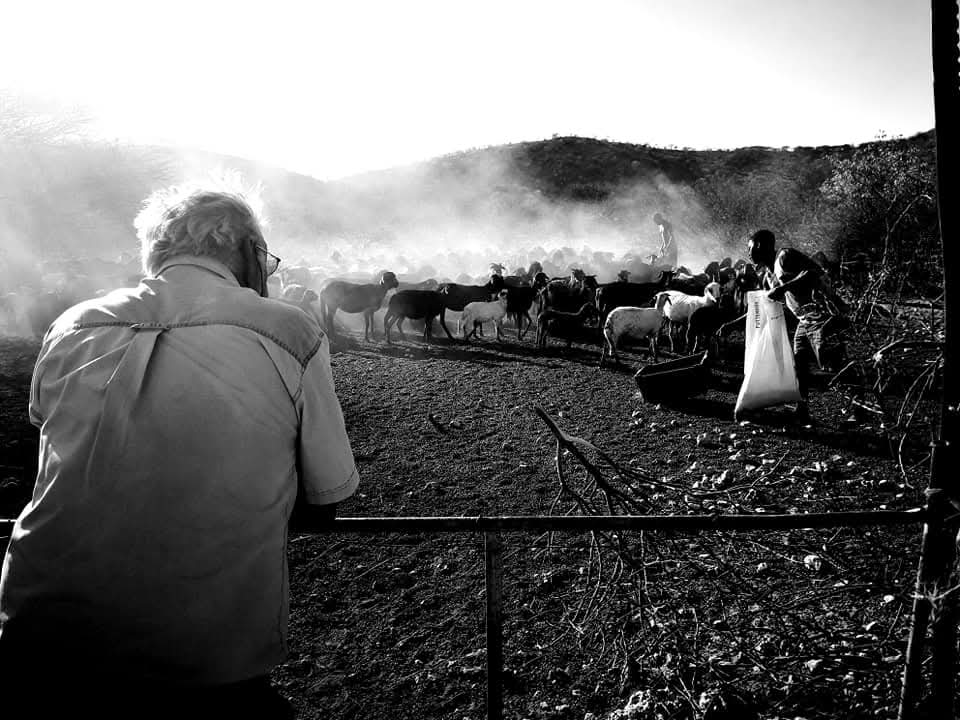
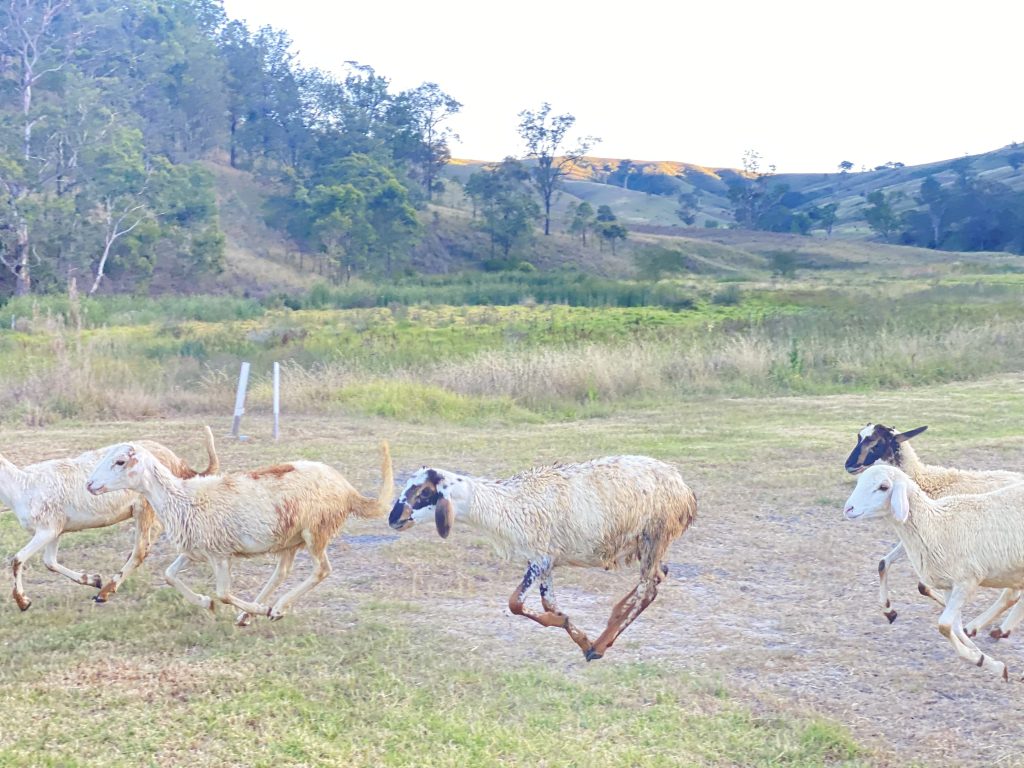
The unmistakable rattle of a container filled with Vella Ewe and Lamb Pellets is, without question, the most powerful sound on the property. It cuts through wind and distraction instantly. Heads snap up. Ears tilt forward. Within seconds, they are trotting—then running—toward the source.
There is something immensely satisfying about watching them stream toward the overnight paddock at the sound of pellets, hooves thudding lightly against the ground, eyes focused with single-minded determination. It makes the evening lock-up routine not only manageable but enjoyable.
That responsiveness has given us confidence. It means we can free graze the girls safely during the day when we are present, moving them across different sections of the property to maximise pasture use. Rotational grazing improves pasture health, prevents overgrazing, and keeps the ewes in good condition leading into breeding season.
For us, though, the separation brings clarity and control. With the flock divided, we can monitor body condition more accurately. We can adjust feed where needed. We can ensure the ewes are cycling naturally and building strength before mating season. And most importantly, we eliminate the risk of unplanned pregnancies.
The plan is simple and intentional: the flock will remain separated until early August. That timing is deliberate. By introducing Malachi to the ewes at that point, we can predict lambing season with reasonable accuracy. It allows us to prepare the nursery paddock, monitor the ewes closely, and ensure we are present during critical periods.
Controlled mating is one of the most important aspects of responsible flock management. It protects the health of the ewes, ensures lambs arrive in favourable conditions, and supports long-term sustainability. It also gives us the chance to observe Malachi in his role when the time is right, rather than leaving it to chance.
Looking back, the separation marked a turning point for us as livestock owners. It signalled a shift from simply “having sheep” to actively managing a breeding program. It required planning, infrastructure, patience, and a willingness to temporarily disrupt the flock’s comfort for long-term benefit.
Today, when we stand at the fence line between the two sides of Sleepy Hollow, we see not division but preparation. The boys are thriving. The girls are content. The system works.
And come early August, when the gate opens and Malachi rejoins his ewes under careful supervision, it will not be an accident. It will be the result of months of thoughtful planning, secure fencing, deliberate separation, and a growing understanding of what it truly means to manage a flock.
Until then, the pellets will continue to rattle, the boys will continue to watch, and Hamilton Ridge Damara Stud will hum along in its steady, sheep-filled rhythm.